


Views: 0 Author: Site Editor Publish Time: 2026-08-08 Origin: Site


Mismatching shrink wrap materials directly undermines your operational efficiency. It causes poor aesthetic results on retail shelves. It also drives up scrap rates, causes weak seal failures, and accelerates hardware wear. You invest heavily in automated systems. Using incorrect plastic consumables sabotages this entire investment. In the decision stage, selecting the right material requires careful balancing. You must weigh product specifications against hardware capabilities and daily production volume. We constantly see operators struggle when they ignore these critical alignment factors. You must evaluate the physical properties of the plastics against equipment thermal limits. This guide provides a strategic framework to evaluate and specify the correct shrink film for packaging machine setups. Our process maximizes daily yield and ensures long-term operational reliability. You will learn how to assess core polymer types accurately. We will also show you how to execute effective sample tests before scaling your production lines.
Material Matrix: Polyolefin (POF) dominates general use, Polyethylene (PE) is required for heavy transit, and PVC is largely being phased out due to equipment corrosion and health risks.
Machine Alignment: Your machine’s sealing mechanism (L-bar vs. continuous) and heat tunnel configuration dictate the required film gauge and slip characteristics.
Yield vs. Cost: Thinner, high-performance films often present a lower total cost of ownership (TCO) than cheaper, thicker alternatives due to fewer roll changeovers and reduced energy consumption.
Testing is Mandatory: Never scale a film rollout without running a minimum viable test to check for seal integrity, "dog ears," and shrink force on your specific product.
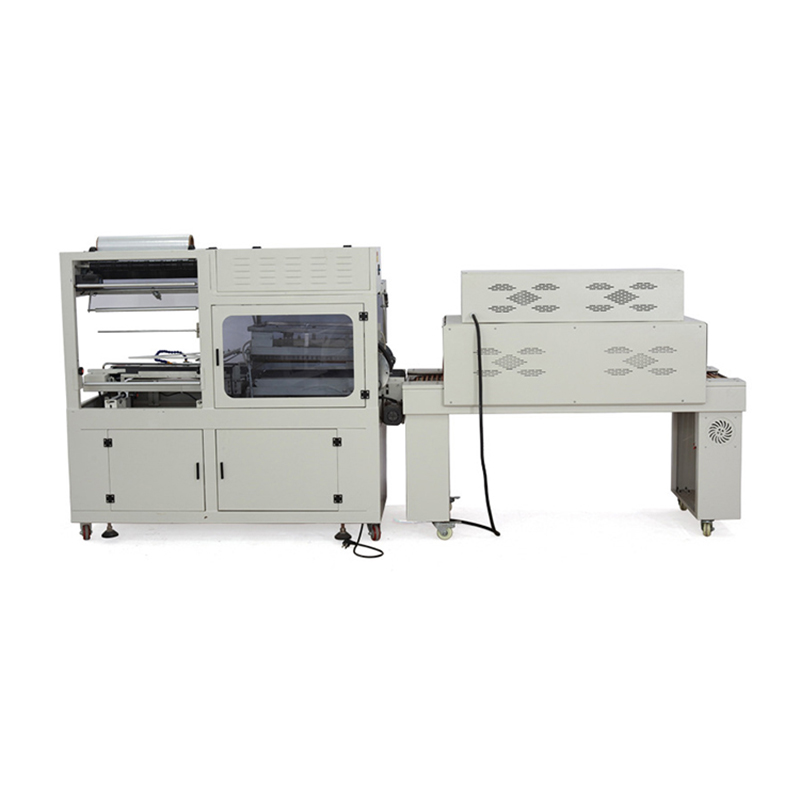
Choosing an incorrect plastic wrap severely impacts daily operations. You face numerous hidden costs when materials fail to match machinery limits. Operators waste hours clearing jams. Maintenance teams constantly replace worn parts. These small inefficiencies quickly accumulate into major production bottlenecks. Understanding these failure points helps you avoid costly operational mistakes.
Incorrect shrink temperatures create immediate maintenance headaches. Running films at wrong heat settings causes molten plastic to stick. Heavy carbon buildup then forms on your sealing blades. We find this buildup degrades seal quality instantly. Your staff must stop production repeatedly to clean the cutting mechanisms. Frequent abrasive cleaning also ruins the Teflon coating on hot knives. You then face expensive replacement part costs.
High shrink-force films pose serious risks to delicate goods. The plastic contracts tightly as it cools. This extreme tension easily crushes fragile retail cartons. It also warps softer plastic containers during transit. You must calculate tension carefully to protect vulnerable items. Soft bakery goods and lightweight cosmetic boxes often suffer severe distortion. We see operators mistakenly increasing heat to fix package wrinkles. This action only increases the contraction force further. You ruin more products by chasing a smoother surface blindly.
A successful material match produces highly repeatable results. You should look for consistently clean seals across thousands of cycles. The process must yield zero burn-through holes across the package surface. Minimal dog-earing on corners indicates proper air evacuation through the micro-perforations. Finally, you want excellent optical clarity to enhance retail display appeal. Meeting all these criteria ensures maximum throughput.
You need a reliable evaluation matrix to make smart purchasing decisions. Buyers must understand the specific strengths and limitations of each polymer. No single plastic wrap solves every logistical challenge perfectly.
Material Type | Best Application Scenarios | Known Limitations |
|---|---|---|
Polyolefin (POF) | Retail display, FDA-approved food packaging, consumer multi-packs. | Requires highly precise temperature control. Carries a higher upfront cost per roll than PVC. |
Polyethylene (PE) | Heavy transit packaging, bundling heavy beverages, large industrial components. | Low optical clarity (cloudy appearance). Requires high thermal capacity to reach activation temperatures. |
Polyvinyl Chloride (PVC) | Budget-conscious applications, low-volume legacy packaging (non-food). | Emits toxic chloride gas during heating. Corrodes machinery parts rapidly. Becomes brittle in cold storage. |
POF stands as the premium choice for retail environments. It provides exceptional clarity and forms very strong, reliable seals. You will find it perfect for FDA-approved food packaging and consumer multi-packs. However, it requires highly precise temperature control to perform optimally. Buyers also face a higher upfront cost per roll compared to legacy options. Despite the initial price, its high yield often justifies the investment.
PE delivers maximum durability for demanding logistics environments. It excels in heavy transit packaging and industrial component bundling. You should expect low optical clarity from this cloudy material. PE is significantly thicker and heavier than retail alternatives. Therefore, it requires a high-capacity Heat Shrink Machine to reach the necessary activation temperatures safely. Standard retail tunnels simply cannot melt it properly.
PVC traditionally served budget-conscious, low-volume applications perfectly. We strongly advise against new adoption today. It emits toxic chloride gas during the heating cycle. This gas corrodes machinery rapidly and poses severe operator health risks. Furthermore, PVC becomes highly brittle in cold storage environments. Packages often crack open during winter transit routing. The industry is actively phasing this polymer out.
Your hardware dictates the exact specifications of the consumables you can run. You must align polymer properties directly to your mechanical setups. Ignoring these equipment limitations guarantees material failure.
L-bar sealers operate differently than continuous motion systems. They require films featuring standard slip levels. Proper slip prevents the plastic from sticking to the hot wire or cutting blade. Conversely, continuous side sealers run at much higher velocities. They demand highly consistent film gauges across the entire web. You should use cross-linked films here. This specific chemical structure prevents web breakage during rapid processing runs on your Shrink Wrapping Machine.
You must match the film activation temperature to your tunnel's thermal capacity. Conveyor speed also plays a critical role in success. Running thick PE on a compact, 110-volt tunnel always fails. The low power output results in incomplete shrinkage. The plastic never reaches its required activation threshold before exiting the thermal chamber. You end up shipping loosely wrapped, unsecure products.
Physical dimensions matter just as much as chemical composition. You must ensure the film roll weight fits your unwind mechanism safely. Overloaded spindles snap under tension. The material width must accommodate your product dimensions perfectly. Finally, verify the core diameter matches your film carriage. Mismatched cores cause feeding jams and uneven web tension.
Selecting the perfect wrap requires measuring four critical dimensions. You must evaluate these specific factors before placing bulk supply orders. A systematic approach prevents wasteful purchasing errors.
You must map the material gauge directly to product weight. We typically use 45 or 60-gauge films for lightweight retail items. A 75-gauge wrap handles medium-weight multi-packs exceptionally well. For heavy transit requirements, you should step up to 100-gauge or thicker. Using overly thick materials on light products wastes money. Conversely, thin materials tear during heavy logistics handling.
Knowing when to upgrade to cross-linked film saves significant production time. Cross-linking creates a stronger, thinner material lattice via electron irradiation. It offers a much broader temperature tolerance during the sealing phase. We highly recommend this upgrade for automated, high-speed Packaging Machine setups. The added strength prevents unexpected web tearing.
You need to calculate the exact tension exerted on the product post-shrink. High shrink force secures heavy items brilliantly during rough transit. However, it easily crushes fragile cardboard boxes. Always match the contraction tension to the structural integrity of your specific items. Ask your supplier for low-force formulations if you package delicate pastries or lightweight cosmetics.
Regulatory compliance remains non-negotiable for modern businesses. You must verify FDA or USDA compliance for any direct food contact applications. Never use industrial plastics for edible goods. Additionally, check the specific recycling codes printed on the supply boxes. Matching a wrap like LDPE #4 against corporate sustainability mandates ensures environmental compliance. Buyers increasingly demand recyclable packaging materials.
Never scale a new material rollout blindly. You must execute strict testing protocols to validate real-world performance. Assumptions often lead to expensive line shutdowns.
We always advise requesting sample rolls before placing massive bulk orders. A standard trial roll provides 1,000 to 2,000 feet of material. This length gives operators enough runtime to observe behavior under normal production speeds. You can identify tearing issues early. It also allows maintenance teams to spot unusual carbon buildup on the cutting knives.
You must calibrate your equipment systematically for every new material type.
Step 1: Dial in the precise seal jaw temperature to achieve clean cuts without stringing.
Step 2: Adjust the tunnel temperature and conveyor speed to optimize internal dwell time.
Step 3: Check the balloon effect to ensure proper air evacuation through the pre-punched perforations.
Following this numbered sequence prevents operators from guessing. You establish a baseline setting for future production runs.
Operators must know how to read bad packaging results accurately. Burn holes indicate the tunnel runs too hot. They can also mean the dwell time lasts too long. Weak, splitting seals mean the jaw operates too cold. It might also indicate inadequate mechanical sealing pressure. Wrinkly, loose corners usually mean the equipment runs too fast. Slowing the conveyor allows the plastic to contract fully.
The most efficient packaging operation always balances material composition against strict hardware constraints. You cannot force a thick, heavy-duty wrap through an underpowered thermal tunnel. You also cannot run highly sensitive retail films on aggressive industrial sealers. We advise starting your evaluation by shortlisting a 60-gauge POF. It serves as a versatile baseline for retail environments. Alternatively, start with a 1.5 mil PE for heavy industrial bundling tasks.
Take action today to optimize your lines. Audit your current production scrap rates immediately to find hidden losses. Document your heating tunnel's maximum continuous temperature output accurately. Finally, consult an industrial materials specialist to arrange a comprehensive sample test on your specific hardware.
A: Usually, you cannot do this without modifications. PE requires significantly higher heat output to activate fully. Furthermore, standard wire sealers struggle to cut heavy PE cleanly. You will typically need to upgrade your equipment by installing a PTFE-coated hot knife to handle PE materials successfully.
A: Most polymer wraps have a standard shelf life of 6 to 12 months. You must maintain strict storage conditions to achieve this longevity. Keep rolls in climate-controlled areas to prevent premature contraction. You must also protect them from direct UV degradation by keeping them boxed.
A: You can use a very straightforward industry formula. Add your product's widest width to its maximum height. Then, add 2 to 3 inches to provide adequate clearance margin. This calculation ensures the web flows smoothly over the forming plow without snagging.
A: Smoking typically indicates one of three problems. First, you might be running legacy PVC, which inherently smokes. Second, residual molten plastic may be burning directly on the heating elements. Third, your tunnel temperatures are simply set above the material's maximum thermal threshold.
