


Views: 0 Author: Site Editor Publish Time: 2026-08-15 Origin: Site


Purchasing industrial equipment is only half the investment. The real test begins when the equipment reaches your facility floor. Successful deployment dictates the actual return on your investment. You have already made the decision to automate or upgrade. However, integrating new machinery into an active facility presents immediate operational risks. Delays disrupt production schedules. Rushed utility connections create safety hazards. Unplanned layout changes inflate budgets overnight.
This guide provides a stringent framework for preparing your facility. You will learn how to verify utilities, spatial logistics, and workflow requirements. We will show you how to ensure everything is ready before the equipment arrives. By following these steps, you prevent costly installation delays and safeguard your operational continuity. Meeting exact packaging machine installation requirements ensures a seamless transition from delivery to daily production.
Utility precision is non-negotiable: Inadequate voltage stability or insufficient compressed air capacity (CFM/PSI) will cause immediate operational faults.
Operational footprint exceeds machine dimensions: Space planning must account for operator ergonomics, maintenance access, and material staging, not just the physical machine chassis.
Layout dictates throughput: A poorly designed production line direction creates material handling bottlenecks that negate the speed of the new machinery.
Machine-specific variances matter: Thermal equipment and film-based wrappers require entirely different environmental and power tolerances.
Delays during installation often stem from site-unreadiness. This lack of preparation leads to idle technicians and delayed time-to-market. When an installation stalls, you pay for specialized labor to wait. Production schedules slip. You miss delivery commitments to your customers. Budget overruns happen quickly when you must scramble for emergency contractors. A poorly planned site creates a cascading effect across your entire operation.
A "plug-and-play" scenario is rare in industrial automation. True success is defined by passing Site Acceptance Testing (SAT) on schedule. You want to pass this milestone without requiring emergency electrical drops. You should avoid layout retrofits at all costs. An effective installation means the machine operates at its specified speed immediately. It means safety systems function correctly on day one. You achieve this by controlling every variable before the delivery truck arrives.
Transparent communication is critical. You must communicate your facility's exact limitations to the equipment manufacturer before the Factory Acceptance Test (FAT). Vendors need to know your realities. Do you have ceiling height limits? Is your concrete floor uneven? Sharing this data early allows engineers to adapt the design. Hiding facility constraints guarantees integration failure. We recommend sending facility blueprints and utility maps to your vendor during the initial design phase.
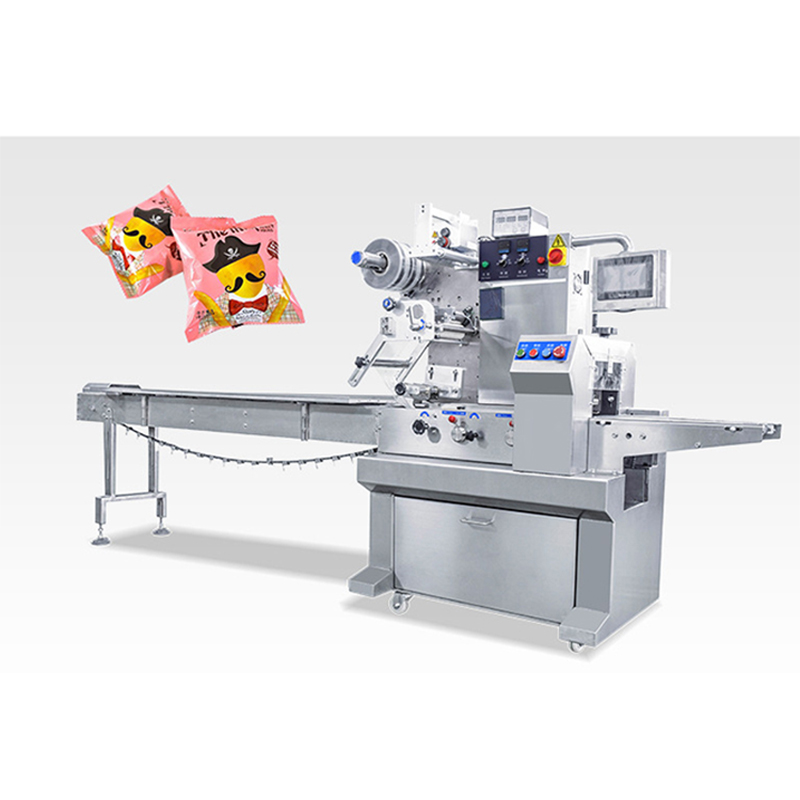
Integrating a Packaging Machine requires robust utility foundations. Industrial equipment demands exact electrical and pneumatic parameters.
Modern machinery relies on stable, high-capacity power. Most industrial systems require 3-phase power. Common configurations include 220V, 380V, or 480V. You must verify your facility can supply the specific amperage limits required by the equipment. Check your main breaker panels. Ensure you have dedicated circuits available. Sharing a circuit with other heavy machinery often causes breaker trips.
Power quality is just as important as power volume. Voltage fluctuations wreak havoc on sensitive electronics. Logic controllers (PLCs) will fault if voltage drops unexpectedly. We strongly recommend installing voltage stabilizers. Dedicated electrical drops prevent line noise from interrupting machine sensors. A clean power supply ensures consistent, error-free automated cycles.
Air supply is the most common point of failure during installation. Facilities often underestimate pneumatic demands. You must meet exact requirements for both Volume (CFM) and Pressure (PSI). CFM dictates how much air the machine consumes. PSI measures the force of the air. Supplying sufficient PSI without adequate CFM will starve pneumatic cylinders mid-cycle.
Air quality compliance is mandatory. The machine needs clean, dry air. Moisture in compressed air lines causes rust inside precision valves. You must install air dryers and micron filters. These components remove water and particulates. Clean air prevents premature pneumatic cylinder wear. Neglecting air filtration voids warranties and guarantees frequent breakdowns.
Assess ambient conditions before installation. Temperature and humidity play a massive role in equipment reliability. Film materials warp in high heat. Cardboard degrades in high humidity. You must maintain stable environmental conditions. Dust levels also require strict management. Airborne particulates interfere with sensitive electronic weighers. They obscure vision inspection systems. If your facility generates heavy dust, you must isolate the packaging area.
Physical space planning goes far beyond measuring the equipment chassis. You must evaluate how humans and machines will interact in the space.
The machine footprint is just the starting point. The operational footprint is much larger. You must define safety perimeters around moving parts. Minimum maintenance clearances are legally required. Usually, you need 3 to 4 feet around control panels. Technicians must open electrical cabinet doors fully. You need clearance to remove large guarding panels. If a motor fails, maintenance teams need room to maneuver lifting equipment. Cramping the machine against a wall guarantees maintenance nightmares.
Evaluating your Production Line layout is a critical step. You must choose between linear and U-shaped line layouts. Facility constraints and material logistics dictate this choice. Linear layouts favor high-speed, continuous flow. U-shaped layouts maximize floor space and allow one operator to manage both loading and unloading.
You must detail exact integration points. Conveyor height matching prevents product jams. Transfer angles must allow smooth transitions. You need dedicated staging areas for raw materials. Finished goods require space before moving to the warehouse. A bottleneck at the exit negates the speed of your new machinery.
Industrial machinery is heavy. It generates significant kinetic energy. You need level, reinforced concrete flooring. A strong floor minimizes vibration. Vibration disrupts delicate scales and optical sensors. High-speed automated systems require perfect calibration. An uneven floor causes uneven wear on bearings and tracks. You may need to pour concrete pads or apply self-leveling epoxy before installation day.
Different machines pose distinct installation challenges. You must tailor your facility preparation based on the specific technology you are deploying.
A Pillow Packing Machine handles products horizontally. This requires extended horizontal infeed space. You must plan for long feeding conveyors. Operators need room to stage products before they enter the wrapper. Film roll loading ergonomics are crucial. Industrial film rolls are heavy. Operators cannot lift them manually. You must ensure adequate overhead clearance. You need clear access for lifting equipment or hoists.
A Heat Shrink Machine uses thermal tunnels to conform plastic film. This requires a high power draw. Thermal elements consume massive amounts of electricity. Verify your breaker panels can handle continuous high amperage. Mandatory ventilation is critical. Shrink tunnels displace intense ambient heat onto the production floor. You must install HVAC exhaust systems. Proper ventilation protects operators from heat exhaustion and prevents facility temperatures from rising.
Palletizers and case erectors form the final step. These systems have large spatial demands. You must discuss forklift turning radii. Forklifts need ample space to safely remove full pallets. Ceiling height is critical for vertical movement. Robotic palletizers swing high into the air. Ensure no overhead pipes or lights obstruct this path. Heavy-duty anchoring requirements are mandatory. You must drill deep into the concrete to bolt these massive systems down safely.
Use the following breakdown to align your facility teams before equipment arrival.
Equipment Category | Primary Utility Focus | Critical Spatial Requirement | Common Pre-Installation Mistake |
|---|---|---|---|
Flow Wrappers | Stable Voltage & Clean Air | Extended horizontal infeed access | Ignoring overhead hoist clearance for film rolls |
Thermal Tunnels | High Amperage Capacity | Dedicated overhead HVAC exhaust | Underestimating ambient heat displacement |
Robotic Palletizers | Heavy-duty floor anchors | Wide forklift turning radius | Failing to measure maximum vertical ceiling height |
Checkweighers | Isolated electrical drops | Vibration-free foundation | Placing near heavy, vibrating equipment |
Preparation requires systematic auditing. Use a structured approach to catch errors before they delay the project.
Site Audit Framework: Conduct a step-by-step internal review prior to machine delivery. Verify receptacle types match the plug configurations on the machine. Confirm breaker capacities align with peak power loads. Trace air line routing to ensure hoses will not create trip hazards.
Logistics and Rigging: Plan the physical route from the receiving dock to the installation site. Measure all door widths. Check ceiling clearances along the entire path. Verify your forklift capacity can handle the crate weight. Rent specialized rigging equipment if necessary.
Safety and Compliance Verification: Ensure your layout adheres to OSHA or local equivalent standards. Emergency stop accessibility is mandatory. Operators must reach E-stops instantly. Define lockout/tagout (LOTO) points. Placed properly, LOTO points protect maintenance teams during servicing.
Next-Step Actions: Formalize the handover process. Gather your facility manager, the electrical contractor, and the OEM installation technicians. Schedule a pre-installation meeting. Assign clear responsibilities for pulling wires, dropping airlines, and leveling the machine chassis.
Anticipating packaging machine installation requirements transforms a disruptive integration into a controlled, predictable rollout. Proper planning protects your investment and ensures operations resume quickly. First, verify all electrical and pneumatic utilities match exact vendor specifications. Second, measure the operational footprint to guarantee maintenance and material flow access. Third, customize your environmental controls based on the specific machinery type you ordered. Finally, finalize your CAD layout and utility drops at least two weeks prior to the scheduled delivery date. This proactive approach eliminates last-minute emergencies and secures a rapid, successful deployment.
A: You will need to install a step-up or step-down transformer to correct the voltage. If the machine requires 3-phase power and you only have single-phase, you must install a phase converter. Running equipment on incorrect voltage causes catastrophic motor failure and voids warranties.
A: OSHA generally requires at least 3 feet of clearance in front of electrical panels. Practically, you should plan for 3 to 4 feet around the entire machine. This ensures technicians can safely open guarding doors, replace parts, and maneuver tool carts without hazard.
A: Modifying layouts later introduces severe risks. Changing flow direction on custom-built conveyors often requires complete factory rebuilds. It is crucial to finalize CAD drawings early. Late changes cause massive delays and inflate project budgets significantly.
A: Generally, your in-house electrical and plumbing contractors handle bringing utility drops to the installation site. OEM technicians handle connecting the machine to those drops. Clearly define these responsibilities in writing before installation begins to avoid delays.
