


Views: 0 Author: Site Editor Publish Time: 2026-07-15 Origin: Site


High-volume commercial kitchens constantly battle operational friction every single day. Manual meat processing forces prep teams into exhausting and repetitive routines. This intensive manual labor inevitably leads to highly inconsistent portioning across batches. It inflates payroll expenses rapidly while significantly reducing your overall product yield. You need a much better way to handle these relentless daily demands. A meat cube cutter machine represents a critical capital expenditure for growth. It allows central kitchens and food processing facilities to scale operations effectively. These automated systems replace chaotic prep tables with streamlined, mechanical precision. They ensure every single piece of meat meets your exact operational specifications. This evaluation guide moves far beyond basic manufacturer marketing claims. We will help you evaluate core specifications and understand daily implementation realities. You will learn how to match equipment perfectly to your specific product state. We will also explore true capacity requirements and rigorous hygiene compliance frameworks. Ultimately, you will gain the exact knowledge necessary to select the perfect unit.
Match the machine to the state of the product: Processing fresh meat requires different blade architecture and torque than frozen meat cutting.
Look beyond stated capacity: Real-world throughput depends on loading times, meat temperature, and operator efficiency, not just motor horsepower.
Prioritize hygiene compliance: True commercial-grade machines require 304 stainless steel and IP-rated electrical components for intensive washdown protocols.
Assess vendor capabilities: Determine if a standard off-the-shelf model suffices, or if an OEM meat cutter is required for specialized facility integration.
Growing a food service operation exposes the severe limitations of manual preparation. Knives rely entirely on human endurance and skill. Human operators naturally fatigue over long shifts. This fatigue creates immediate problems for both quality control and raw material utilization. Scaling up requires removing the human variable from the actual cutting action. Mechanical automation provides the only sustainable path forward for processing high volumes of protein.
Yield Optimization and Portion Control: Precise grid blades act as exact physical templates. They force the meat through uniform sizing chambers before the final cross-cut. This mechanical process reduces trim waste dramatically compared to hand cutting. Uniform cubes guarantee perfectly even cooking times across large batches. Consistent cooking directly improves your food cost percentages by preventing overcooked shrinkage or undercooked waste.
Labor Reallocation: Transitioning to automated dicing changes your entire kitchen dynamic. You can shift skilled prep cooks away from tedious knife work. They can focus on higher-value culinary tasks instead. One trained machine operator easily replaces multiple manual prep workers. This structural shift reorganizes your labor force for maximum daily efficiency.
Consistency at Volume: Mechanical cubing maintains strict quality standards effortlessly. It delivers identical results whether you process fifty pounds or five hundred pounds. This flawless repeatability matters immensely for managing multiple franchise locations. Customers expect the exact same dish at every single restaurant. Automated cutting also supports high-capacity catering events seamlessly, eliminating unexpected portion shortages.
Relying on manual labor caps your maximum daily output. Dedicated cutting equipment shatters this ceiling entirely. It transforms your raw protein processing into a highly predictable, easily measurable manufacturing step. You gain complete control over your ingredient input metrics.
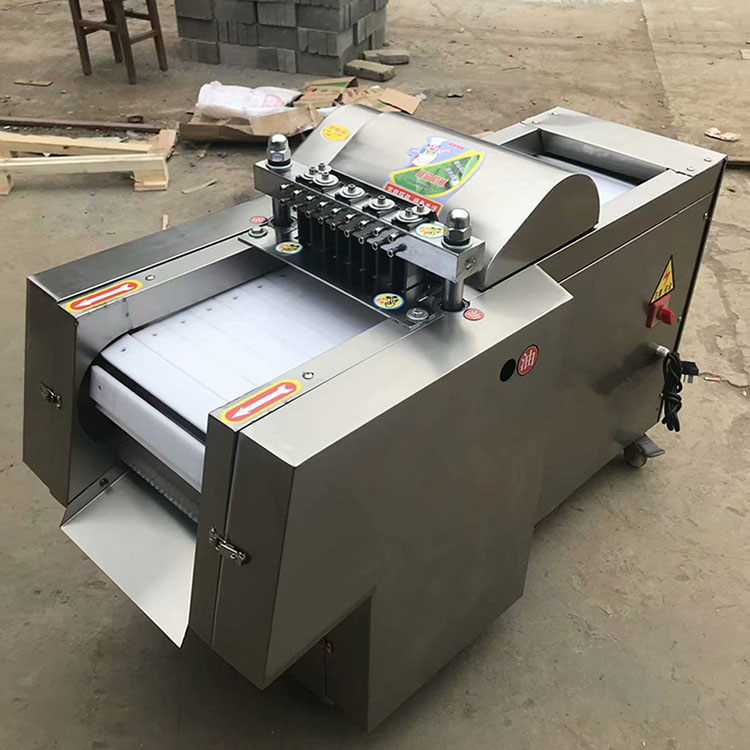
The physical state of your raw material dictates your equipment selection entirely. Temperature changes the cellular structure of muscle tissue completely. You cannot process different states using the exact same mechanical approach. Attempting to do so will destroy your product or damage your equipment.
The Temperature Variable
Meat behaves differently at various thermal stages. Warm meat shifts and slides under pressure. Frozen meat acts like solid ice and resists blade penetration violently. You must understand your specific processing temperature before evaluating any machine. This baseline metric informs every other specification requirement. Equipment manufacturers build specific mechanisms to handle distinct thermal profiles.
Frozen Meat Capabilities
Heavy-duty processors handle tempered frozen blocks efficiently. Most facilities temper their product to a specific range, typically between -4°C to -8°C. Proper frozen meat cutting demands immense mechanical torque and highly reinforced blade structures. At this specific temperature, the fat and moisture bind the meat firmly but still allow sheer forces to penetrate. You must actively warn procurement teams against machines claiming to process deep-frozen solid blocks (-18°C or colder). Processing deep-frozen meat without specialized industrial reduction equipment causes catastrophic blade shattering. It also burns out standard electric motors rapidly. The internal resistance simply overpowers conventional cutting grids.
Fresh and Cooked Meat Handling
Fresh or cooked proteins present an entirely different physical challenge. Soft textures lack internal rigidity. Standard blades tend to smash fresh meat rather than slice it cleanly. Machines optimized for fresh meat feature highly specialized compression mechanisms. These pre-press chambers squeeze the product tightly before it hits the blade grid. This firm compression prevents the muscle fibers from tearing apart unevenly. Without proper compression, fresh meat easily turns into unappealing mush during processing. Cooked meats require similar gentle handling to maintain their cooked structure.
Choosing the right machine involves analyzing distinct technical specifications. You must cross-reference marketing claims against actual physical capabilities. A superficial review often leads to underpowered or inappropriate equipment choices.
Theoretical capacity differs wildly from operational reality. A machine rated for 1000kg/h assumes a continuous, perfectly uniform product feed. It ignores human factors completely. Real-world throughput depends heavily on operator loading speeds. It also relies on how quickly teams can remove the diced product from the discharge area. You should expect actual operational yields to hover around 60% to 70% of theoretical maximums.
Motor specifications determine if the machine can handle continuous daily stress. Small standalone restaurants might survive using 1.5HP motors for light prep work. High-volume processing plants require 3HP or greater to prevent stalling. You must evaluate your electrical infrastructure before purchasing. High-capacity motors demand dedicated three-phase power connections. Standard single-phase electrical outlets simply cannot handle the immense startup surges generated by industrial equipment.
Versatility remains a primary selling point for an industrial meat cube cutter. Standard dicing grid sizes generally range from 5mm up to 30mm. You must determine how easily your team can swap these blade sets during an active shift. Tool-less removal designs save incredibly valuable production time. They allow operators to switch from cutting 10mm soup cubes to 25mm stew chunks in minutes. Older or cheaper designs often require maintenance staff intervention and specialized tools. This cumbersome process causes unnecessary production bottlenecks and discourages menu variety.
Food safety compliance determines a machine's actual lifespan in a commercial environment. You cannot compromise on these specific structural elements.
Material compliance: Emphasize the strict necessity of food-grade 304 stainless steel everywhere. It prevents aggressive corrosion caused by acidic meat juices. It also withstands the harsh alkaline cleaning chemicals used daily.
Sanitation design: Inspect the structural framework for smooth, continuous welds. Avoid machines featuring deep crevices or bolted joints. These areas become dangerous catch points for dangerous bacterial growth. Demand IP65 or higher rated electrical enclosures. This rating ensures the machine survives rigorous, high-pressure hot water washdowns safely.
Operator safety: Kitchen environments move fast. Operators make mistakes. Mandate non-bypassable magnetic safety sensors immediately. These sensors belong on the loading hopper doors and the discharge chutes. The machine must absolutely refuse to operate if any guard sits out of proper alignment.
Industrial Cutting Specifications Evaluation
Specification Category | Light Commercial Standard | High-Volume Industrial Standard |
|---|---|---|
Motor Power | 1.0 HP to 2.0 HP | 3.0 HP to 5.5+ HP |
Electrical Requirement | 110V / 220V Single-Phase | 220V / 380V Three-Phase |
Material Construction | 201 Stainless Steel / Aluminum | 100% 304 Food-Grade Stainless Steel |
Blade Change Mechanism | Tool-required bolted grids | Tool-less quick-release cassettes |
Washdown Rating | Wipe-down only (IP54) | High-pressure hose safe (IP65+) |
Purchasing the equipment only solves the first half of the processing puzzle. Integrating it into your daily facility workflow introduces entirely new challenges. Kitchen managers often underestimate the sheer physical space and logistical support these automated systems demand.
The Footprint and Workflow Reality
Evaluate your floor plan critically. The machine footprint only represents a fraction of the required space. You must map out the entire staging workflow. Operators need adjacent space for staging heavy totes of raw product. They also need ample clearance for large collection bins positioned under the discharge chute. Failing to allocate sufficient staging areas creates severe kitchen traffic jams. It forces staff to carry heavy bins across slippery floors unnecessarily.
Maintenance Overheads
Mechanical automation requires strict ongoing maintenance routines. You must budget for regular blade sharpening cycles. Dull blades crush the product and strain the internal motor components. Moving mechanical parts demand consistent application of food-safe lubrication. Neglecting lubrication leads to premature gear failure. You must also identify local sources for common replacement parts. Relying on slow overseas shipping for critical components guarantees prolonged facility downtime.
Operator Training
Do not assume automated equipment eliminates the need for skill. A steep learning curve exists for feeding the machine properly. Operators must understand how to orient the meat grain correctly before loading. Overloading the compression chamber causes frustrating mechanical jams. Proper feeding techniques ensure maximum cut uniformity and prevent motor stalling. We strongly recommend writing clear, step-by-step operating procedures immediately upon installation.
Common Implementation Mistakes to Avoid:
Ignoring facility voltage limits before signing purchase orders.
Failing to temper frozen blocks accurately before processing begins.
Using high-pressure hoses on non-IP-rated electrical control panels.
Allowing operators to bypass hopper safety interlock switches manually.
The market offers diverse equipment tiers. You must align your vendor choice with your specific operational scale. Buying too much machine wastes capital. Buying too little guarantees immediate mechanical failure.
When to buy standard equipment
A standard commercial meat cutter works perfectly for many traditional operations. Standalone restaurants benefit greatly from these off-the-shelf models. Mid-sized commercial kitchens handling standard menu items find them highly effective. These units plug into standard workflows easily. They handle predictable volumes using common grid sizes. Parts remain easily accessible through standard restaurant supply networks.
When to specify an OEM solution
Large-scale food processors face highly complex facility challenges daily. They almost always require an OEM meat cutter. Off-the-shelf units rarely fit perfectly into massive automated assembly lines. You might need custom conveyor belt integration to move product directly into packaging systems. Specific regional facilities require distinct voltage and frequency adaptations. Proprietary menu items often demand highly unusual cube sizing. OEM manufacturers engineer these exact solutions directly into the equipment framework for you.
Vendor Vetting Criteria
Never trust brochures alone. Advise your procurement buyers to demand customized video demonstrations. Ask the manufacturer to process your specific product type on camera. Mandate they test it at the exact temperature you intend to run in your facility. This empirical evidence proves their equipment actually handles your unique operational reality.
Standard vs. OEM Comparison Chart
Comparison Factor | Standard Commercial Cutter | OEM Specialized Cutter |
|---|---|---|
Lead Time | Usually in stock, ships quickly | Requires extended manufacturing time |
Integration Capability | Standalone operation only | Integrates with existing conveyors |
Blade Customization | Standard fixed sizes (e.g., 10mm, 20mm) | Fully custom grid dimensions |
Ideal User Base | Restaurants, local butchers, caterers | Industrial processors, central kitchens |
Selecting the right processing equipment transforms commercial kitchen operations fundamentally. You must strictly align the raw meat state, desired volume throughput, and your existing facility infrastructure. Base your entire decision framework on these three pillars. We advise buyers to look far beyond simple labor savings. Calculate your true return on investment by factoring in the massive yield gains achieved through exact portioning. Stop wasting valuable protein through sloppy manual processing.
Your immediate next step requires precise action. Conduct a thorough facility audit today. Map out your available physical space and document your exact electrical power capacity. Once you gather this internal data, contact shortlisted B2B manufacturers directly. Request detailed specification sheets and demand custom video demonstrations. Armed with this knowledge, you can finalize a purchase that drives lasting operational efficiency.
A: Most industrial machines require you to temper the meat to a range between -4°C and -8°C. At this temperature, the product remains firm enough for clean slices without shattering. Cutting meat colder than this risks catastrophic mechanical failure and destroys blade assemblies instantly.
A: While some multipurpose machines exist, dedicated meat cutters feature specific compression chambers and blade architectures. Cross-using equipment compromises blade sharpness rapidly. It also introduces severe hygiene and allergen cross-contamination risks. You should generally keep meat processing equipment dedicated to proteins.
A: Sharpening cycles depend entirely on daily operational hours and product toughness. Heavy-duty facilities processing tempered frozen meat daily might require sharpening every two to three weeks. Processing softer fresh meats extends this timeframe significantly. Inspect blades weekly for micro-fractures or dull edges.
A: Modern industrial units prioritize sanitation highly. They feature removable cutting grids, quick-release components, and smooth stainless steel welds. High-quality machines utilize washdown-safe, IP65-rated motors. These specialized designs accommodate daily, rigorous foaming and high-pressure sanitation protocols required by strict health departments.
