


Views: 0 Author: Site Editor Publish Time: 2026-01-05 Origin: Site


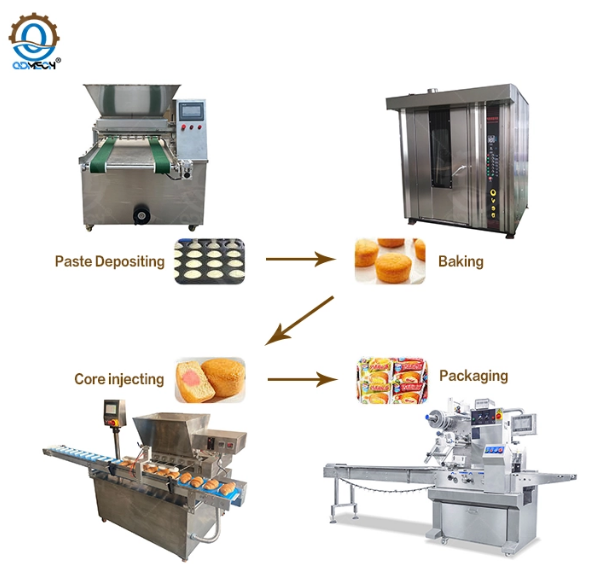
Running a profitable bakery is rarely just about the quality of your flour or the creativity of your recipes. It fundamentally hinges on a delicate balance between labor costs, ingredient waste management, and daily production throughput. When you invest in new equipment, you are not merely recording an expense on a balance sheet. You are making a strategic decision that directly dictates your menu capabilities and future scalability. A wrong choice here creates bottlenecks that stall growth, while the right choice streamlines operations for years.
This guide moves beyond basic product descriptions to provide a robust evaluation framework. We will cover Total Cost of Ownership (TCO), return on investment calculations, and specific selection criteria for core bakery machines. You will learn how to match equipment specifications to your business reality, ensuring every dollar spent contributes to higher efficiency and better margins.
Volume Dictates Specification: Buying over-capacity kills cash flow; buying under-capacity bottlenecks growth. Precise output modeling is step one.
Specialization vs. Versatility: Automated cake making machines require different ROI calculations than general-purpose bread forming machines.
The Hidden TCO: Energy efficiency and maintenance labor often outweigh the initial purchase price variance over a 5-year period.
Serviceability is Critical: A machine without local parts availability is a liability, regardless of its feature set.
Before you browse catalogs or visit showrooms, you must audit your current operations. Equipment should solve a specific problem, such as labor shortages or inconsistent product quality. Defining these needs prevents emotional purchasing decisions driven by shiny features you may never use.
Understanding your numbers is the first step. Do not rely solely on daily averages, as they often mask critical stress points. Instead, calculate your "peak hour" requirements. If you need 500 croissants ready by 7:00 AM, a machine capable of 2,000 units per day is useless if it can only produce 50 units per hour. You must map specific products to required automation levels. For instance, rustic artisan loaves may require gentle handling that mimics manual folding, whereas uniform burger buns demand high-speed, high-pressure division.
Physical limitations often dictate equipment choices more than budget does. Evaluate the footprint of the machine against workflow ergonomics. Operators need space to move safely around the unit for loading, unloading, and cleaning. Before shortlisting any options, verify your facility's infrastructure. Check your electrical phases (single vs. three-phase), available amperage, gas line BTU capacity, and ventilation hood dimensions. Installing a high-output oven only to discover you lack the gas pressure to run it is a costly oversight.
Your equipment selection should complement your team’s expertise. Manual control equipment offers flexibility but requires skilled bakers who understand dough fermentation and temperature nuances. If you face high staff turnover or rely on entry-level employees, programmable automation is often a safer investment. These systems allow you to pre-set recipes, ensuring consistent results regardless of who is on shift.
The oven is the engine of your bakery. It transforms raw dough into salable product, and its performance directly impacts texture, volume, and crust quality. Choosing the wrong type can limit your menu or increase energy bills significantly.
For products requiring significant oven spring and a crispy bottom crust, a deck oven is superior. These units utilize conduction heat, transferring energy directly from the stone hearth to the dough. This thermal mass is essential for traditional baguettes and authentic pizza. In a direct pizza/bread oven comparison, deck ovens win on crust development, while convection ovens excel at uniformity. Convection units use fans to circulate hot air, creating an even bake perfect for cookies, pastries, and sponge cakes where specific crust formation is less critical.
| Oven Type | Primary Heat Method | Best Application | Throughput Level |
|---|---|---|---|
| Deck Oven | Conduction & Radiant | Artisan Bread, Pizza | Low to Medium |
| Convection Oven | Convection (Airflow) | Pastries, Cookies, Cakes | Medium |
| Rack Oven | Convection | High Volume Bagels/Rolls | High |
| Tunnel Oven | Direct/Indirect Heat | Industrial Production | Very High (Continuous) |
As production scales, loading individual decks becomes inefficient. Rack ovens allow operators to roll entire racks of product into the baking chamber, drastically reducing handling time. However, there is a scalability break-point. When your volume exceeds what batch baking can handle efficiently, you must consider continuous systems. A tunnel food oven allows for a conveyor-based workflow, where product enters one end and exits fully baked at the other, streamlining industrial-level output.
Steam is the secret ingredient for professional bread. It keeps the dough surface moist during the initial baking phase, allowing maximum expansion before the crust sets. When evaluating steam oven technology, examine the steam generation method. Self-generating units are compact and sufficient for smaller batches. External boiler systems, however, provide the rapid, high-volume recovery needed for continuous loading of crusty breads, ensuring the last batch of the day looks as good as the first.
The choice between gas and electric models often comes down to regional utility costs and installation constraints. Gas ovens generally offer faster heat recovery times, which is vital during peak production cycles. Electric ovens, however, tend to provide a cleaner, drier heat that some pastry chefs prefer. Analyze your local kilowatt-hour rates versus natural gas therm prices to project long-term operating costs.
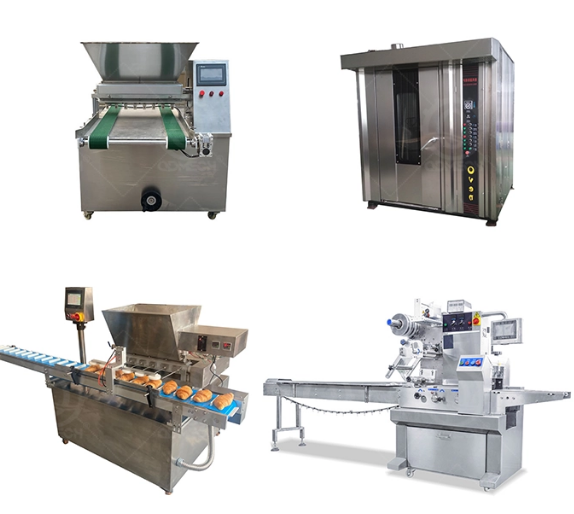
Consistency in weighing and shaping is where profit margins are either saved or lost. Automating this stage reduces physical strain on staff and ensures every product meets your cost-control standards.
Weight accuracy is paramount. A divider that fluctuates by even 5 grams per portion can result in hundreds of kilos of lost dough over a year. Beyond accuracy, consider how the machine handles the dough. Hydraulic dividers are robust but can be harsh. Volumetric dividers are faster but may struggle with high-hydration doughs. You need equipment that processes the dough without overworking or "degassing" it, preserving the fermentation structure you worked hard to create.
Versatility is the main driver here. A modern bread forming machine should handle various shapes, from long baguettes to short batards and round rolls. Look closely at changeover times. If it takes your team 45 minutes to reconfigure the machine from one product to another, you lose valuable production time. Quick-release belts and programmable settings can reduce this downtime to minutes, making your bread forming line far more agile.
Many bakeries are diversifying into fresh pasta or fusion dough products to maximize revenue. A commercial noodle making machine is an excellent addition for this purpose. When selecting one, focus on roller pressure adjustability. Different flours and hydration levels react differently to compression. Precision in noodle making also depends on cutter quality; poor cutters result in fused strands and waste. Ensure the machine can handle the specific texture and firmness of the doughs you plan to introduce.
Pastry and confectionery production requires a higher degree of delicacy and precision than bread. The machinery here must handle sticky, aerated, or viscous materials without compromising their structure.
In high-volume scenarios, hand-piping batter is inefficient. Automated depositors must handle a wide range of viscosities, from liquid sponge batters to stiff buttercream frostings. When evaluating a cake making machine, look at throughput metrics like cupcakes per minute or layer cakes per hour. Crucially, assess the cleaning protocols. CIP (Clean-in-Place) features are invaluable. They allow you to flush the system and switch flavors quickly, ensuring your cake making schedule isn't derailed by hygiene downtime.
For bakeries producing filled cookies, mooncakes, or stuffed pastries, encrusting machines are essential. These units co-extrude dough and filling simultaneously. The key performance indicator here is ratio control. You must be able to fine-tune exactly how much filling goes into each piece to ensure flavor balance and manage ingredient costs. Consistent wall thickness prevents filling leakage during baking, which is critical for customer satisfaction.
The sticker price is only the tip of the iceberg. Smart buyers analyze the Total Cost of Ownership (TCO) over the machine's expected lifespan, which includes energy, maintenance, and labor impacts.
Bakery equipment is energy-intensive. When comparing models, look beyond the purchase price to the kilowatt-hour or BTU consumption ratings. High-quality insulation in a bread oven retains heat better, meaning the burners or elements cycle on less frequently. This efficiency can save thousands of dollars annually, often paying for the price difference of a premium model within two years.
In a commercial kitchen, durability is non-negotiable. Inspect the build quality, specifically the gauge of stainless steel used. Thicker steel resists denting and warping under high heat. Consider the "Right-to-Repair" factor as well. Are internal components accessible for technicians? Machines with proprietary, sealed systems can lead to extended downtime if a minor part fails. Prioritize equipment with modular designs that allow for quick component swaps.
To justify the investment, use a clear formula: (Labor Savings + Waste Reduction + Capacity Increase) / (CapEx + OpEx). For example, if an automated line saves 20 labor hours a week and reduces dough waste by 5%, calculate the monetary value of those savings over a year. Compare this against the loan payments and operating expenses. For high-end automated lines, a breakeven timeline of 18 to 24 months is typically considered a strong investment.
Even the best machine will fail if it isn't installed correctly or if it violates local health codes. Due diligence in the final stages of purchasing protects your business from legal and operational risks.
Never compromise on safety certifications. Ensure every piece of equipment carries NSF/ANSI sanitation certifications, which verify that the machine is easy to clean and safe for food contact. Additionally, look for UL or ETL safety listings. These certifications are often required by insurance providers and local building inspectors. Operating uncertified equipment can void your insurance policy in the event of a fire or accident.
A vendor is a long-term partner, not just a seller. Perform the "Parts Test" before signing a contract: ask for the lead time on a critical replacement part, such as a drive belt or a control board. If the answer is "four weeks from overseas," walk away. You cannot afford to halt production for a month. Review warranty structures carefully, ensuring that labor is covered alongside parts, as service calls are often the most expensive component of repairs.
Modern bakery machinery is complex. Factory-authorized installation is often a condition for warranty validation. This ensures the unit is calibrated correctly and connected to the right utilities. equally important is staff training. Operator error is a leading cause of premature equipment failure. Ensure the vendor provides comprehensive training for your team, covering not just operation but also daily cleaning and basic troubleshooting.
The best bakery machines are not necessarily the ones with the most digital touchscreens or the highest theoretical output. They are the ones that fit your specific operational workflow, budget, and long-term goals. By assessing your menu needs, verifying utility constraints, and calculating the true cost of ownership, you can build a production line that supports profitability rather than draining it.
We encourage a "measure twice, buy once" approach. Conduct utility audits, request material testing with vendors using your own dough, and plan your floor space meticulously before signing any purchase orders. The right equipment is out there—it just requires a disciplined approach to find it.
Start today by auditing your current production bottlenecks. Identify where you are losing time or money, and use that data as the foundation for your next equipment investment.
A: The primary difference lies in heat transfer. Deck ovens use conductive heat from a stone hearth, which is essential for developing the crust and volume in artisan breads. Convection ovens use fans to circulate hot air, providing even heat distribution ideal for pastries and cookies but potentially drying out bread crusts too quickly if not managed correctly.
A: Calculate your peak-hour production goal rather than your daily average. If you need 1,000 rolls ready between 6 AM and 8 AM, your machine must handle at least 500 units per hour. Always add a 15-20% buffer to this number to account for cleaning, dough resting, and potential downtime.
A: Yes, if you produce a diverse menu. A combi-oven offers immense versatility in a small footprint, allowing you to steam, bake, and roast. While the initial cost is higher, the ability to produce high-quality crusty breads and delicate pastries in a single unit saves valuable floor space and utility hookups.
A: Regular maintenance focuses on roller alignment and lubrication. Misaligned rollers cause uneven sheet thickness. You must also manage flour dust accumulation, which can clog gears and sensors. Daily cleaning of the cutters is critical to prevent hardened dough from dulling the blades or affecting the texture of fresh noodles.
A: Often, yes. Many regions offer "green energy" rebates or tax incentives for upgrading to high-efficiency appliances. In the US, Section 179 tax deductions may allow you to write off the full purchase price of qualifying equipment. Always consult with a local tax professional to identify current opportunities in your area.
