


Views: 0 Author: Site Editor Publish Time: 2026-05-27 Origin: Site


Upgrading or expanding a production line represents a high-stakes capital expenditure for any facility. Choosing the wrong machinery results in severe compliance failures. You will also face integration bottlenecks and unacceptable plant downtime. These errors quickly erode your overall profitability. Sourcing scalable, compliant assets requires looking far beyond basic vendor spec sheets. You must critically evaluate sanitary design, material durability, and operator usability. Relying on superficial metrics often leads to poorly integrated manufacturing systems.
This guide breaks down the essential technical and operational frameworks. We will show you exactly how to evaluate and procure critical plant assets effectively. You will learn to identify specific operational bottlenecks accurately. We also help you compare material standards and mitigate implementation risks. Ultimately, you will gain the knowledge needed to build a highly efficient environment. You can confidently future-proof your entire processing operation.
Evaluate machinery based on sanitary design standards (e.g., FSMA, 3-A, EHEDG) and Clean-in-Place (CIP) capabilities to minimize labor and contamination risks.
Prioritize 304 or 316/316L stainless steel depending on the acidity and salinity of your specific product matrix.
Assess vendor support networks, specifically focusing on replacement part availability and SLA lead times, before reviewing commercial food processing equipment for sale.
Compare Total Cost of Ownership (TCO)—including utility consumption, maintenance labor, and expected downtime—rather than just the upfront CAPEX.
Equipment ages daily on the factory floor. Wear and tear accelerate significantly over time. You will notice maintenance costs rising steadily each quarter. Micro-stoppages become a daily headache for your floor operators. We measure these specific losses using Overall Equipment Effectiveness (OEE). A dropping efficiency score signals an urgent operational problem. Compare these ongoing repair expenses against financing new assets. Repairs often exceed new equipment costs eventually. You must upgrade your line when this financial crossover happens.
Perform a strict efficiency audit before buying new machines. You need concrete data to justify the capital purchase. We recommend tracking micro-stoppages over a consecutive two-week period.
Every manufacturing facility has a distinct limiting step. This single step restricts your overall plant capacity. You might find this bottleneck in preparation, processing, or packaging. Identifying this exact phase remains crucial for sustainable growth. Map your entire production line thoroughly today. Look for areas where raw product pools unnecessarily. Observe where operators wait for slow machines to catch up. Upgrading just the bottleneck phase yields massive efficiency gains. You avoid spending capital on already efficient line segments.
Government regulators frequently update their sanitation rules. You might fail recent sanitation audits due to outdated designs. Older machines often feature hidden crevices and poor welds. These areas harbor dangerous bacteria like Listeria and Salmonella. Modern regulations demand crevice-free, highly hygienic machinery everywhere. You cannot risk devastating product recalls. We highly recommend upgrading to meet strict FSMA standards immediately. Preventing a single recall pays for the new machinery.
The manufacturing industry faces severe workforce shortages globally. Automating highly repetitive tasks is now mandatory for survival. Manual processing causes frequent ergonomic injuries among workers. It also drains valuable labor hours from your budget. Modern food processing equipment automates these labor-intensive steps perfectly. You can then move skilled workers into machine-management roles. This strategic shift reduces injury rates dramatically. It also boosts overall employee morale and retention.
Finding the right equipment starts with proper categorization. We separate these assets by their specific production phase. Each category demands different evaluation metrics and engineering priorities.
You start your production line right here. Slicers, dicers, grinders, and industrial mixers dominate this phase. High-quality prep machinery ensures uniform product cuts consistently. Yield retention serves as your primary evaluation metric here. You want to minimize product degradation during physical processing. Waste reduction directly improves your profit margins. Precision cutting reduces product giveaway significantly.
Heating and cooling transform your raw ingredients completely. Pasteurizers, industrial fryers, ovens, and centrifuges perform this heavy lifting. Energy efficiency matters most in this intensive phase. You must track BTU consumption per hour accurately. Temperature consistency guarantees overall product safety and quality. Thermal recovery capabilities capture lost heat efficiently. You reuse this captured heat to lower utility bills.
Packaging finalizes your product for the consumer market. Conveyors, sealers, and filling machines move goods swiftly. Upstream synchronization prevents jamming and product pile-ups. You must ensure PLC compatibility across all connected devices. Fast changeover speeds matter greatly in multi-product facilities. They allow you to switch SKUs rapidly without delays.
Category Phase | Primary Equipment Focus | Key Evaluation Metric |
|---|---|---|
Preparation & Size Reduction | Slicers, dicers, grinders, mixers | Yield retention & waste reduction |
Thermal Processing & Separation | Pasteurizers, ovens, fryers, centrifuges | Energy efficiency (BTU/hr) & thermal recovery |
Packaging & Integration | Conveyors, sealers, filling machines | Upstream synchronization & changeover speed |
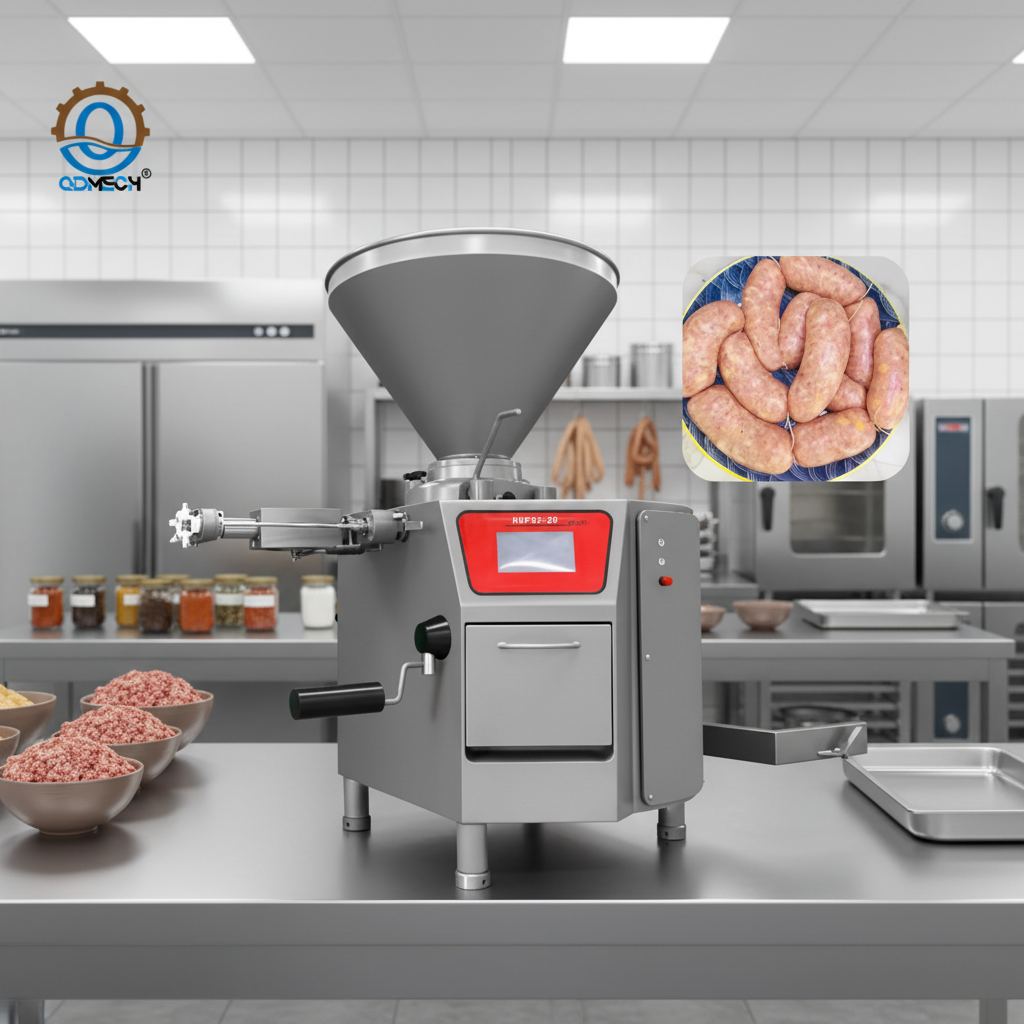
Evaluating commercial food processing equipment demands rigorous attention to detail. You must scrutinize materials, cleaning capabilities, and modularity.
Standard steel fails rapidly in wet processing environments. It rusts and compromises food safety protocols instantly. You must understand the necessity of specialized stainless steel. 304 stainless serves as the baseline for general processing. It resists basic corrosion effectively. However, 316 or 316L stainless is mandatory for harsher environments. You need 316 for highly acidic, saline, or caustic washdown areas. The added molybdenum protects against pitting and severe degradation.
You must also evaluate machinery weld quality carefully. Continuous welding creates smooth, cleanable surfaces. Spot welding creates tiny gaps between metal sheets. These gaps become harbor points for bacterial growth. Listeria thrives in these microscopic crevices. You should reject any machinery featuring exposed threads or flat ledges. Sloped surfaces ensure proper water drainage during sanitation.
Material Grade | Best Application | Key Characteristics |
|---|---|---|
304 Stainless Steel | General food processing, dry environments | Durable, standard corrosion resistance, cost-effective |
316/316L Stainless | Highly acidic, saline, or caustic environments | Contains molybdenum, superior pitting resistance |
Standard Carbon Steel | Non-food contact zones, dry packaging areas | Prone to rust, fails immediately in washdowns |
Clean-in-Place (CIP) systems revolutionize modern plant sanitation routines. They allow automated, closed-loop cleaning without equipment teardowns. Traditional Clean-out-of-Place (COP) requires massive manual effort daily. Operators must disassemble machine parts by hand. They soak components in chemical baths manually. This process risks damage to delicate machine sensors. It also introduces dangerous human error into sanitation protocols.
CIP systems pump detergents directly through internal machinery pipes. They maintain precise chemical concentrations automatically. You must calculate the exact labor hours saved. You also need to measure chemical usage reductions accurately. We recommend taking specific steps to evaluate CIP viability.
Measure current daily labor hours spent on COP routines.
Calculate the volume of water and chemicals wasted manually.
Estimate potential production hours gained by eliminating manual teardowns.
Compare these operational savings against the CIP system upgrade cost.
Modern consumers demand high product variety constantly. Multi-product facilities must switch batches frequently. Long changeovers destroy your daily production capacity. You need machinery featuring tool-less changeover capabilities. Operators should swap parts using simple quick-release clamps. Eliminate the need for wrenches or specialized tools entirely. Applying Single-Minute Exchange of Dies (SMED) principles reduces batch-switching delays. Modular equipment adapts to new SKUs easily. You secure a much faster return on your initial investment.
When you search for food processing equipment for sale, you face a major decision. You must carefully weigh the benefits of new versus used assets.
Buying new machinery provides unparalleled peace of mind. You receive the latest automation and PLC integration. New assets seamlessly connect to modern facility networks. You also benefit from comprehensive OEM warranties. These warranties protect your capital against early mechanical failures. New machines offer highly predictable operational lifespans. However, you must accept certain drawbacks. You face extended manufacturing lead times commonly reaching 12 to 36 weeks. You also require a significantly higher upfront capital expenditure.
Evaluating used assets remains highly viable for standard footprint machines. Conveyors and basic mixers are excellent refurbished candidates. They help you bypass long manufacturing lead times entirely. You can install them in weeks rather than months. However, you must proactively mitigate operational risks. We advise mandating comprehensive maintenance logs from the seller. You should inspect critical wear parts carefully before purchasing. Check all seals, bearings, and drive motors for excessive wear. You must also verify software compatibility. Ensure legacy software can integrate with your current line.
Many buyers purchase used machines without checking software versions. Legacy PLCs often fail to communicate with modern SCADA systems. This creates isolated data silos on your factory floor.
You should never buy an asset without confirming parts availability. A cheap machine becomes a massive liability quickly. It halts production for a month if a proprietary sensor breaks. You must ensure domestic or localized availability of wear parts. Review the vendor Service Level Agreement (SLA) thoroughly. Demand guaranteed response times for emergency technician dispatch. Evaluate their technical support network rigorously. Reliable support keeps your production line running smoothly.
Integrating industrial food processing equipment requires careful facility preparation. You must audit your physical infrastructure before delivery.
New machinery demands specific physical and utility requirements. You must verify your facility footprint can accommodate the asset. Clear pathways for safe operator movement remain essential. You also need to audit your utility infrastructure thoroughly. Check your electrical load capacity against the machine specifications. Verify you have adequate compressed air and steam generation. Proper water drainage requirements are absolutely critical. Inadequate drainage causes pooling water and severe sanitation failures.
Modern equipment relies heavily on digital communication. The new machine features a Programmable Logic Controller (PLC). You must ensure this PLC communicates seamlessly with your systems. It needs to talk to your existing SCADA or ERP platforms. Poor integration prevents accurate production tracking. It creates dangerous data silos across your facility. Engage your internal IT team early in the procurement process. They will map the data architecture needed for success.
New technology introduces a steep learning curve always. Highly automated machinery requires operators to adopt new skill sets. They transition from manual laborers into machine-management roles. You must account for this learning curve in your production schedule. Evaluate the OEM onboarding and training support carefully. Do they provide on-site training sessions? Do they offer comprehensive digital manuals? Proper training prevents costly operator errors during the initial rollout.
Procuring food processing equipment serves as a major exercise in risk management. Success depends heavily on balancing your immediate throughput needs carefully. You must weigh these needs against long-term sanitation compliance. Evaluating material science, cleanability, and vendor support prevents costly mistakes. Relying strictly on upfront pricing leads to poor integration. You must consider utility demands, integration capabilities, and operator safety.
Your next steps require detailed internal documentation. Draft a standardized User Requirement Specification (URS) document immediately. Detail your exact throughput goals, material standards, and spatial requirements clearly. Share this comprehensive document before soliciting bids from OEMs. Provide it to specialized dealers to ensure accurate proposals. This structured approach guarantees you select the perfect machinery for your facility.
A: 304 serves as the industry standard for general food processing. It provides excellent durability for dry environments. 316 contains molybdenum. This vital addition offers superior resistance to severe corrosion. You need 316 for harsh sanitizing chemicals, high salinity, and acidic foods like tomatoes or citrus.
A: Calculate your initial capital expenditure and ongoing operational costs. Factor in daily utility consumption, maintenance labor, and facility expenses. Compare these against your projected production increases. Include improvements in yield, reduced giveaway, and lower manual labor costs. Reduced sanitation downtime also drives massive value for your overall return.
A: Off-the-shelf machinery minimizes long lead times significantly. It also ensures readily available replacement parts locally. Custom-built equipment presents higher initial costs and longer waits. You only need custom builds for highly proprietary product formulations. They also solve severely constrained or unusual facility layout problems.
A: Look for equipment adhering strictly to 3-A Sanitary Standards. You should also demand EHEDG design guidelines for hygienic engineering. Ensure the machinery fully complies with FDA and FSMA regulatory requirements. These specific standards guarantee proper preventative controls and safe daily sanitation practices.
