


Views: 0 Author: Site Editor Publish Time: 2026-08-01 Origin: Site


Procuring liquid packaging equipment represents a high-stakes capital expenditure. Vendor reliability directly dictates your production uptime. It also drives your total return on investment over the long term. Choosing the wrong manufacturing partner carries severe operational risks. You might face hidden maintenance issues daily. You could encounter non-compliance in strict sanitary design. Poor handling of specific liquid viscosities often halts production completely. You need a highly structured evaluation approach. Evaluating how to choose a reliable liquid packaging machine manufacturer requires moving past glossy marketing brochures. You must conduct rigorous, evidence-based technical audits instead. This level of capital investment demands extreme diligence from your engineering and procurement teams. A failing machine cascades into missed deliveries and lost retail contracts. We will explore seven critical checks below. These checks help secure your equipment investment efficiently. You will learn how to validate pump types, verify component sourcing, and enforce successful testing protocols.
Define your product’s exact viscosity and container requirements before vendor outreach.
Check 1-3: Assess material handling precision, equipment versatility, and automation accuracy.
Check 4-5: Verify component sourcing transparency and sanitary compliance (e.g., CE, GMP).
Check 6-7: Evaluate downstream integration capabilities and the reality of global after-sales support.
Never skip a structured Factory Acceptance Test (FAT) using your actual product.
Before contacting any suppliers, you must establish clear internal baselines. Vague production goals often lead to mismatched equipment purchases. You need hard metrics to guide your entire procurement strategy.
Define your exact success criteria early. Detail your target output per minute clearly. Determine the acceptable product giveaway margin for your budget. Set strict limits for daily changeover times. These hard metrics form the ultimate foundation of your vendor evaluation.
Understand your specific fluid application nuances deeply. A generic Packaging Machine rarely solves highly specific liquid challenges. Vendors must know your exact fluid properties immediately. Is the liquid heavily foaming during fast agitation? Is the product stringy when dispensing stops? Does it contain heavy, fragile particulates? Is the fluid highly volatile or flammable? You must share these critical details upfront.
Fluid behaviors change under different temperatures. Heat alters viscosity significantly. You must document these thermal changes carefully. Provide vendors with accurate viscosity charts. This ensures accurate engineering calculations.
Common Mistake: Many buyers share only container sizes. They forget to detail liquid viscosity curves at different temperatures. This oversight leads to incompatible pump selections later.
Best Practices for Procurement Baselines:
Draft a preliminary User Requirement Specification (URS) before calls.
Document your ambient facility temperature and humidity conditions.
List your available utility inputs like compressed air and power.
Define your maximum footprint limits for the factory floor.
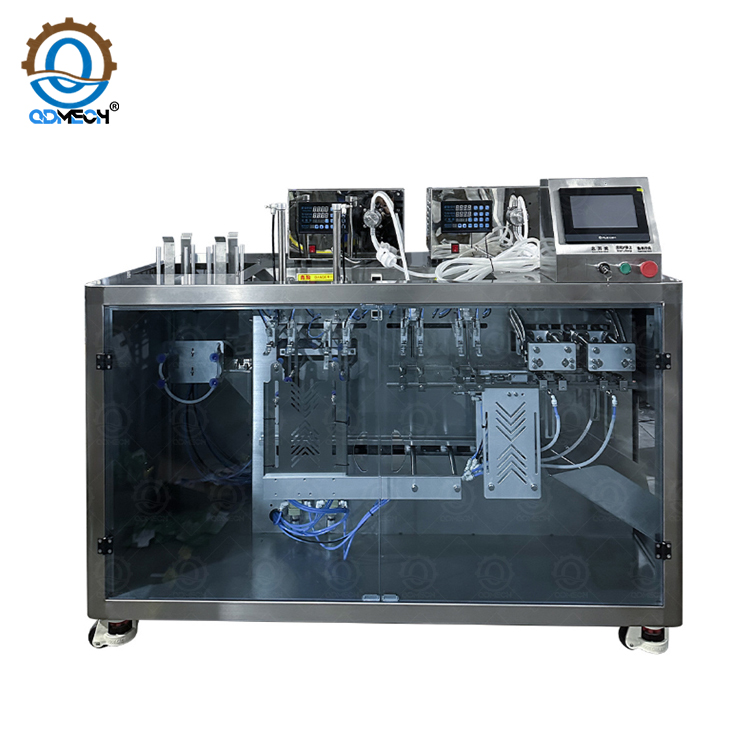
Technical capability separates industry leaders from average machinery builders. You must scrutinize their mechanical engineering approach. Focus heavily on fluid dynamics expertise. Evaluate their format flexibility closely.
Assess the vendor’s deep expertise in pump technology. They must match pump types to specific liquid states perfectly. Thin liquids flow very easily. They often suit standard gravity or overflow fillers well. Thick liquids require aggressive mechanical force. Piston or lobe pumps drive high-viscosity products effectively.
Different fluids demand completely different handling. Setting up a Tomato Paste Filling Line demands heavy-duty piston pumps. Tomato paste contains dense particulates. It heavily resists smooth flow. The wrong pump will crush the product entirely. It will also destroy your production speeds. Ask vendors to explain their specific pump selection rationale. They should justify their choices using fluid dynamics data.
Modern production schedules demand immense flexibility. Evaluate the machine's ability to handle multiple product SKUs. Long changeovers destroy your daily throughput capacity. Ask vendors for officially documented changeover times.
Consider flexible packaging formats very carefully. Evaluate if a Liquid Pouch Packing Machine transitions easily between sizes. Can it switch varying pouch widths quickly? Does it handle different spout placements without major delays? Look for modern tool-less changeover features. Quick-release mechanisms save countless operational hours each week. Fast guide rail adjustments improve your equipment effectiveness instantly.
Dosing accuracy directly impacts your bottom line profit margins. Overfilling wastes expensive product rapidly. Underfilling triggers severe regulatory fines. You need tight standard deviations across all fill cycles.
Look for modern servo-driven mechanisms. Avoid purely pneumatic systems for critical dosing control. Servos provide highly precise, repeatable mechanical motion. They allow micro-adjustments during live operation. Calculate the long-term financial impact of accuracy. Saving just two grams per cycle yields massive annual material savings. Servo systems outlast pneumatic cylinders in high-speed environments. They require much less maintenance over time.
Reliable equipment requires high-quality internal components. It must also meet strict industry safety standards globally. Never compromise on sourcing transparency. Never ignore sanitary design requirements.
Demand absolute transparency on all core machine components. Check the specific brands of PLCs, sensors, and pneumatics. Proprietary custom components create massive business risks. They lock you into single-source replacement parts forever.
Shortlist manufacturers using globally available component brands. Siemens, Allen-Bradley, Omron, and SMC represent safe choices. You can buy these standard parts anywhere locally. This transparency prevents long-term vendor lock-in. It also minimizes unexpected downtime during emergency part failures. Standard parts simplify your maintenance team's daily tasks.
Look for strict adherence to compliance standards. Verify GMP, FDA, or CE certifications explicitly. These are not optional luxury upgrades. They represent fundamental safety baselines for food and pharmaceutical packaging.
Emphasize specific sanitary construction features heavily. Clean-In-Place (CIP) readiness is absolutely crucial. Demand 316L stainless steel for all product contact parts. These specifications remain non-negotiable for strict hygiene environments.
Pharmaceutical applications require pristine operational conditions. An Oral Liquid Capping Machine must eliminate cross-contamination risks entirely. Look for smooth, continuous TIG welds. Check for self-draining sloped surfaces. Avoid any dead legs in the piping layout.
No single machine operates in complete isolation. Equipment must communicate seamlessly across the factory floor. Post-installation support determines your long-term success.
Evaluate the manufacturer’s line integration capabilities carefully. They must synchronize fillers with upstream bottle rinsers. They must connect seamlessly with downstream cappers, labelers, and case packers.
Avoid buying isolated machinery. Disconnected machines create massive production bottlenecks. They require extra human operators to transfer products manually. Ask vendors about their overall line control philosophy. Ensure they provide a master PLC interface panel. This centralizes fault diagnostics across the entire production line. It allows operators to monitor speeds from one single screen.
Look past the standard marketing promises. Claims mean nothing during a midnight breakdown. Ask for concrete, verifiable evidence of their support infrastructure.
Request standard Service Level Agreement (SLA) response times. Ask for comprehensive bilingual maintenance manuals. Verify their secure remote PLC troubleshooting capabilities. Ensure they maintain domestic spare parts hubs near you.
Address the risk for cross-border buyers directly. Ask exactly how warranty claims process in reality. Do you ship broken parts back overseas? Do they dispatch local field technicians? You must understand this exact workflow before purchasing. Delays in service cost you daily revenue.
The Factory Acceptance Test represents your final financial safeguard. It confirms real performance before you authorize final shipping.
Frame the FAT as the final proof of reliability. It occurs right before you release the final payment. Never skip this critical milestone under any circumstances. It forces the manufacturer to prove their marketing claims. It reveals hidden integration flaws while the machine remains at the factory. Fixing mechanical issues here costs significantly less than on-site modifications.
Insist on running the equipment under realistic factory conditions. Conduct all tests directly at the manufacturer’s facility. Use your actual liquid product formulations. Bring your actual bottles, caps, and production film.
Demand a sustained duration test period. A simple five-minute dry run proves absolutely nothing. Run the machine continuously for several hours. This exposes dangerous thermal expansion issues. It reveals early component fatigue. It tests the true continuous capability of the entire system.
Detail exactly what constitutes a passing grade. Do not leave test results open to interpretation. Establish a strict, documented sign-off protocol. Address speed, seal integrity, and noise levels.
Table: FAT Sign-Off Criteria
Evaluation Area | Testing Metric | Acceptable Standard |
|---|---|---|
Production Speed | Cycles per minute (CPM) | Must maintain 98% of target CPM for 2 hours continuously. |
Seal Integrity | Pressure test / Visual inspection | Zero leaks allowed. 100% burst test pass rate. |
Dosing Accuracy | Fill weight standard deviation | Within +/- 1% of target weight across 500 consecutive samples. |
Noise Levels | Decibel (dB) reading at operator station | Must remain below 80 dB during continuous operation. |
Knowing how to choose the right manufacturing partner is critical. It serves as a strict exercise in corporate risk mitigation. You must demand rigorous technical scrutiny of pump types. You must verify component brands carefully. You must validate their after-sales infrastructure deeply.
Take decisive action immediately. Draft a comprehensive User Requirement Specification (URS) document. Base this foundational document on these seven key checks. Complete this URS before soliciting your very first quote. Clear technical requirements attract highly capable manufacturers. They repel unqualified vendors quickly. Protect your major capital investment through highly disciplined evaluation.
A: Standard lead times typically range from 3 to 6 months. This timeline depends heavily on overall line complexity. Engineering design takes several weeks initially. Component procurement and custom fabrication require the most time. Complex robotic automation extends the schedule further. Always add buffer weeks for testing and international shipping.
A: Do not trust sales brochures alone. Request uncut video case studies of similar liquid applications. More importantly, validate the standard deviation during your official FAT. Weigh hundreds of consecutive filled samples. Use your actual fluid product to calculate the real-world variance accurately.
A: Both channels offer unique business advantages. Local distributors offer much faster technician dispatch. They provide localized spare part stocks. Buying direct from overseas offers significantly better pricing. It grants direct access to the original mechanical engineers. The best approach involves finding overseas vendors who maintain established local service partnerships.
