


Views: 0 Author: Site Editor Publish Time: 2026-04-10 Origin: Site


Why does garlic slow down a fast food production line so easily? It seems like a small step, yet peeling large volumes can waste labor, delay prep, and affect product consistency more than many teams expect. Even a few extra seconds per batch can grow into a major daily loss.
Garlic is essential in sauces, marinades, ready meals, and frozen foods, so peeling it efficiently matters. In large-scale processing, manual work often struggles to keep pace as output rises. In this article, we will discuss faster garlic peeling methods for different production needs. You will also learn when a fruit vegetable machine becomes the smarter choice for improving speed, consistency, and overall workflow.
In any food production line, each step depends on the previous one. Garlic peeling sits early in the workflow, which means delays here ripple through the entire process. If peeling cannot keep up, cutting, mixing, and cooking stages are forced to slow down or wait.
This creates idle time for equipment and staff. It also disrupts scheduling, especially in facilities that run tight production windows. Faster peeling ensures that raw materials move smoothly into downstream operations without interruption.
In high-output environments, even a 10% improvement in peeling speed can significantly increase total daily throughput. That makes this step far more important than it first appears.
Manual garlic peeling is labor-intensive. Workers must separate cloves, remove skins, and clean up debris. Over time, this repetitive task reduces productivity and increases fatigue.
For businesses, this translates into higher labor costs per unit of output. Hiring more workers may solve short-term demand, but it reduces profit margins in the long run. By improving peeling efficiency—whether through better methods or automation—companies can reduce reliance on manual labor while maintaining or increasing output levels.
Consistency is critical in food production. Uneven peeling can leave skin fragments behind or damage cloves, affecting flavor, texture, and appearance in the final product.
When peeling is standardized, it ensures that each batch meets the same quality standards. This is especially important for products like garlic paste, sauces, or pre-cut vegetables, where uniformity directly impacts customer satisfaction.
Method | Best For | Key Advantage |
Knife Smash | Small batches | Simple and fast for few cloves |
Two-Bowl Shaking | Medium batches | Peels multiple cloves at once |
Blanching | Cooking applications | Easy peeling after heating |
Microwave | Quick small prep | Very fast and low effort |
Commercial Equipment | Large-scale production | High efficiency and automation |
For small kitchens or test batches, the knife smash method remains one of the fastest options. A chef presses down on a clove using the flat side of a knife, causing the skin to loosen instantly.
This method is simple and requires no additional tools. It works well when preparing a few cloves at a time. However, it becomes inefficient when scaling up, as each clove must be handled individually.
While effective for low-volume needs, it is not suitable for production environments where speed and volume are critical.
The two-bowl shaking method is widely used for medium-scale preparation. By placing garlic cloves between two bowls and shaking them vigorously, friction separates the skins from the cloves. This approach allows multiple cloves to be peeled at once, making it faster than manual peeling. It is especially useful in restaurant kitchens or small catering operations.
However, it still requires manual effort and may need repeated shaking to achieve complete peeling. For larger volumes, this method becomes physically demanding and less efficient.
Blanching involves briefly placing garlic cloves in boiling water, then transferring them to cold water. The heat loosens the skins, making them easy to remove. This method works best when the garlic will be cooked immediately, such as in soups or sauces. It reduces peeling effort and speeds up preparation.
However, blanching slightly alters the texture and flavor of garlic. For applications requiring raw garlic, this method may not be ideal.
Microwaving garlic cloves for a short time creates steam between the skin and the clove. This helps the skin slide off easily. It is a quick solution for small quantities, especially when immediate peeling is needed. The method requires minimal effort and works well in compact kitchen settings.
Still, like blanching, it may slightly affect the garlic’s structure. It is best used when speed is more important than maintaining raw texture.
For large-scale food production, commercial garlic peeling equipment offers the most efficient solution. These systems are designed to handle high volumes continuously, reducing the need for manual intervention. They use techniques such as air pressure or mechanical tumbling to separate skins quickly. This allows businesses to process large quantities in minutes rather than hours.
Tip: If daily garlic usage exceeds several tens of kilograms, switching to automated peeling can dramatically reduce labor costs and improve consistency.
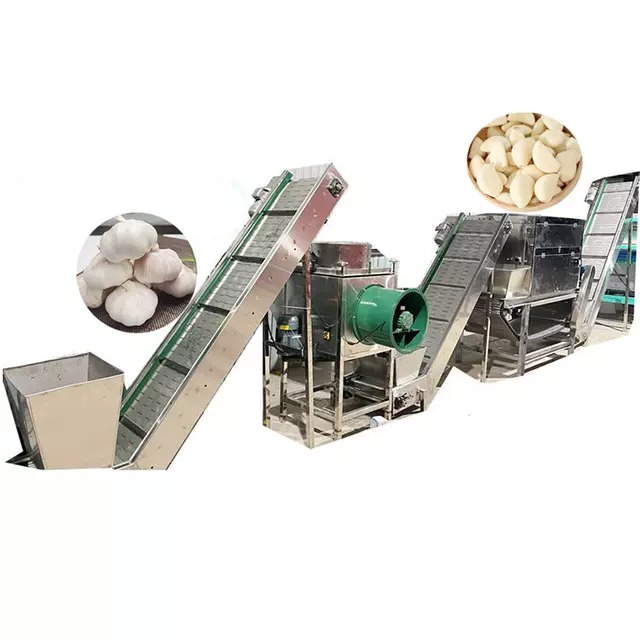
A garlic peeling fruit vegetable machine automates the entire peeling process. It separates cloves, removes skins, and collects the peeled garlic efficiently.
Unlike manual methods, it handles large volumes with consistent results. This reduces variation between batches and ensures that each clove is processed evenly. It also minimizes damage to the garlic, which is important for maintaining quality in products like sliced garlic or whole-clove packaging.
Modern machines rely on airflow or rotating motion. Air systems push skins away from cloves without damaging them. Tumbling systems create controlled friction to loosen skins effectively.
Both approaches aim to protect the garlic while increasing speed. They allow continuous operation, which fits well into automated production lines.
Peeling System Type | Key Advantage | Best Use Case |
Air-based system | Gentle on cloves | Whole garlic products |
Tumbling system | High efficiency | Bulk processing lines |
These two systems serve different production needs. Choosing the right one depends on whether you prioritize clove integrity or processing speed.
Selecting the right garlic peeling method is not only about speed. It depends on your production size, daily output, and final product requirements. Different operations need different levels of efficiency, flexibility, and automation.
Below is a clear comparison to help match peeling solutions to real production scenarios:
Production Type | Typical Needs | Recommended Solution | Key Benefit |
Small kitchens & catering | Flexibility, low investment | Manual or simple tools | Easy to use and cost-effective for small batches |
Central kitchens & food facilities | High throughput, consistency | Fruit vegetable machine | Stable output and continuous processing |
Product-based selection | Depends on end use | Adjust method (manual or automated) | Better quality control for final products |
In practice, smaller operations often choose manual methods because they require less investment and offer flexibility. However, as garlic usage becomes frequent, even these kitchens can benefit from semi-automated tools to save time and reduce workload.
Larger facilities, such as central kitchens and processing plants, need reliable and continuous output. In these cases, a fruit vegetable machine helps maintain efficiency and supports daily production without interruption. At the same time, the final product plays an important role. Whole cloves need gentle handling, while garlic paste allows faster and more aggressive processing. Choosing the right combination ensures both efficiency and product quality.
Dry, mature garlic is easier to peel because the skin separates more easily from the clove. Fresh garlic tends to be moist, making peeling slower and more difficult. This difference becomes more noticeable when processing large volumes. Selecting the right raw material can significantly improve efficiency before any processing begins. It also helps reduce waste caused by damaged or partially peeled cloves.
Breaking garlic bulbs into individual cloves before peeling saves time during processing. It ensures that each clove is exposed and ready for efficient peeling.
This simple step reduces bottlenecks and improves overall workflow. It also allows machines or manual methods to operate more evenly and consistently across batches.
Removing the root end of each clove helps loosen the skin. This small adjustment can make peeling faster, especially when using mechanical or friction-based methods. It also improves the overall peeling result by reducing the number of cloves that require reprocessing or additional handling.
Efficient workflow design is just as important as the peeling method itself. Proper organization of tools, containers, and transfer steps reduces unnecessary movement and delays.
A clear layout helps workers move faster and keeps the process smooth from start to finish. Even small adjustments in positioning can improve daily output.Note: A well-structured prep area can improve peeling speed as much as upgrading equipment, especially in mid-scale operations.
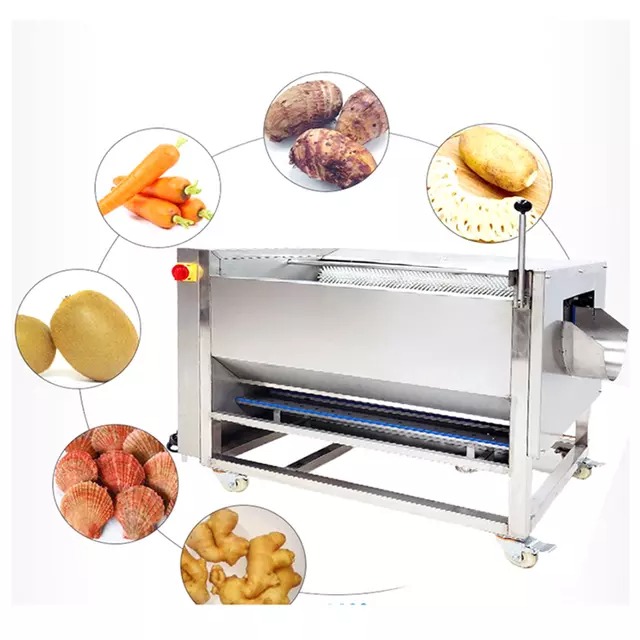
A fruit vegetable machine allows businesses to process large volumes of garlic quickly. It reduces the need for manual labor, freeing workers for other tasks.
This leads to higher productivity and lower operating costs over time. It also helps maintain steady output even during peak production periods.
Automation ensures that each clove is peeled in the same way. This improves consistency and reduces waste caused by damaged or improperly peeled garlic.
Consistency is especially important for branded food products. It helps maintain uniform taste, texture, and appearance across all batches.
Modern machines integrate easily with other equipment, such as cutting, washing, and packaging systems. This creates a seamless production line.
It reduces handling time and improves overall efficiency. It also minimizes manual transfer steps, which lowers the risk of contamination or errors.
As demand increases, production must scale. Automated systems make it easier to expand without increasing labor proportionally. Companies like Chanda have demonstrated how reliable equipment supports global operations across many markets. This makes it easier for businesses to meet growing demand with confidence.
Benefit Area | Manual Method | Machine Processing |
Speed | Low | High |
Labor Need | High | Reduced |
Consistency | Variable | Stable |
Scalability | Limited | Strong |
This comparison clearly shows how automation improves both efficiency and reliability. In most growing operations, switching to machine processing becomes a practical step rather than an option.
Peeling garlic faster in food production depends on choosing methods that match scale and workflow. Small kitchens can use manual techniques, but they become inefficient as volume grows and labor demand increases. As production expands, faster and more consistent solutions become necessary to keep operations running smoothly.
Automation offers clear advantages for medium and large operations. It improves processing speed, reduces manual effort, and delivers stable quality across batches. A reliable fruit vegetable machine helps turn garlic peeling into a continuous and efficient step. Chanda Machine Co.,Ltd. provides equipment designed for this purpose, offering consistent performance and easy integration into processing lines. Their machines help businesses increase output, lower costs, and maintain product quality in demanding production environments.
A: The fastest method depends on volume. Small batches can use knife smashing or bowl shaking, while large operations benefit more from automated peeling equipment for steady, high-speed output.
A: A fruit vegetable machine speeds up garlic peeling by reducing manual handling and processing more cloves in less time. It also helps keep output consistent across batches.
A: They choose a fruit vegetable machine because it improves efficiency, lowers labor pressure, and supports continuous production. It also helps maintain cleaner and more uniform processing results.
A: For medium and large production, yes. A fruit vegetable machine is usually better because it handles higher volumes faster and more consistently than manual methods.
A: Dry, mature garlic usually works best in a fruit vegetable machine because its skin separates more easily. It helps improve peeling speed and overall efficiency.
A: Separate the cloves first, use dry bulbs, and trim root ends when needed. These steps reduce peeling resistance and help the process move more smoothly.
