


Views: 0 Author: Site Editor Publish Time: 2026-07-13 Origin: Site


Transitioning from manual blending to automated batching represents a critical scalability decision. High-volume hospitality venues face immense pressure during peak operational hours. You can no longer rely on slow methods when summer crowds hit your bar. Speed and consistency dictate your ultimate service quality. We define operational success well beyond just serving an excellent beverage. You must actively reduce ticket times and standardize your daily pour proportions. Lowering your dependency on specialized bartender labor matters immensely for seamless shifts. Manual blending slows down service dramatically. It creates inconsistent textures and causes frustrating front-of-house bottlenecks. This comprehensive guide offers a highly pragmatic framework. You will learn exactly how to evaluate, source, and operate high-capacity systems efficiently. We explore everything from critical Brix formulas to optimal compressor configurations. You will discover actionable steps to upgrade your beverage program today.
Labor & Speed: Transitioning from blenders to a dedicated frozen cocktail machine reduces per-drink service time from minutes to seconds.
The Brix Formula: Operational success relies entirely on mastering the sugar-to-alcohol ratio (Brix level); without it, machines will either seize up or fail to freeze.
Sizing to Volume: Selecting the right compressor type and bowl capacity prevents mid-shift thawing and excessive wait times.
Total Cost of Ownership: Initial equipment costs must be weighed against strict, non-negotiable cleaning schedules and OEM maintenance requirements.
Manual ice-crushing creates massive menu variability. A standard cocktail maker machine relies heavily on user technique and ice quality. Bartenders often struggle to achieve the perfect texture consistently. Conversely, automated systems provide unmatched uniformity across every shift. A continuously churning auger keeps the beverage perfectly suspended. It guarantees every single pour looks and tastes identical.
Speed defines your weekend service capabilities. We can quantify this difference easily. A hand-blended margarita takes roughly two minutes to build, blend, and pour. A pre-batched drink dispenses in exactly four seconds. This rapid fulfillment transforms front-of-house dynamics entirely. Waitstaff can fulfill orders instantly. You free up skilled bartenders for complex builds. They can focus on high-margin shaken drinks instead.
Ingredient waste damages your bottom line heavily. Measured batching eliminates this problem. Bartenders often over-pour liquor during a busy rush. They also overfill blenders, sending excess product down the drain. Upgrading to a dedicated slushy machine mitigates the melted return phenomenon. Poorly blended drinks separate quickly on a table. Customers send them back, killing your profit margin. Automation solves this by holding the mix at a precise, constant temperature.
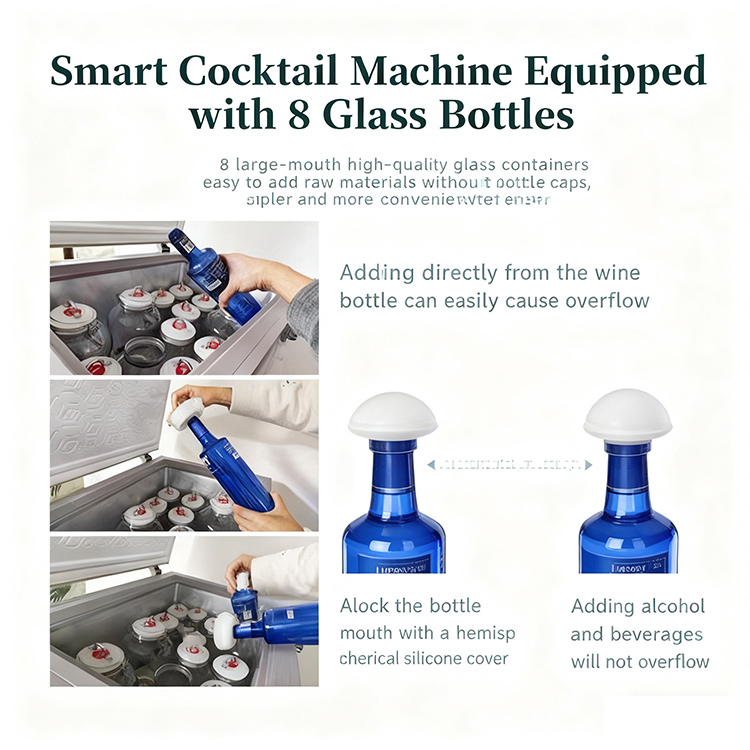
Your bowl configuration directly impacts menu flexibility. A single-bowl system works well for serving one signature item. However, multi-bowl systems offer superior operational flexibility. You can offer multiple flavor profiles simultaneously. You might run a high-alcohol margarita alongside a virgin strawberry daiquiri. Capacity planning requires careful baseline metrics. You must evaluate gallon or liter capacity against peak hourly foot traffic. A small bowl will deplete too fast during busy happy hours.
Compressor selection determines your cooling speed. Air-cooled units remain popular due to lower installation complexity. However, they require significant ventilation clearance. You must leave at least six inches of open space around them. Blocking their vents causes rapid overheating. Water-cooled compressors work beautifully in tight spaces. They reject heat into a water line rather than the surrounding room. They do require dedicated plumbing access.
Recovery time matters immensely mid-shift. If you add a new batch, how fast does it refreeze? A powerful compressor minimizes this dreaded downtime. Any professional commercial frozen drink setup needs rapid recovery capabilities.
Durability dictates commercial lifespan. You need a solid stainless steel chassis. Plastic housings crack under rigorous daily use. High-torque auger motors handle thick slushes effortlessly. Polycarbonate bowls resist shattering if dropped during cleaning.
Configuration Feature | Best Use Case | Operational Benefit |
|---|---|---|
Single-Bowl System | Small bars, single signature drinks | Low counter footprint, easy cleaning |
Multi-Bowl System | High-volume clubs, diverse menus | Simultaneous flavor and alcohol variations |
Air-Cooled Compressor | Open counters, well-ventilated rooms | No complex plumbing required |
Water-Cooled Compressor | Tight spaces, hot kitchen environments | Zero ambient heat output, faster recovery |
Understanding the chemistry of frozen cocktails prevents disastrous equipment failures. Ethanol possesses a powerful antifreeze effect. It drastically lowers the freezing point of any liquid. You must apply a precise counter-balance of sugar. Without adequate sugar, the alcohol prevents proper slush formation. You just get a cold, watery soup.
Target Brix levels represent your primary success metric. The Brix scale measures dissolved sugar content in a liquid. A commercial frozen cocktail machine requires a Brix level between 13% and 15%. If your mixture drops below 13%, it freezes solid. Solid ice blocks will immediately snap the auger. This destroys the internal motor. If it exceeds 15%, the mixture remains too soft. Invest in a digital refractometer. It measures Brix levels accurately in seconds.
Overrun calculations determine your true yield. Overrun describes the ambient air whipped into the product during freezing. A continuous churning process fluffs up the liquid base. Higher overrun increases your volume per batch. It dramatically improves your margins per cup. You sell air alongside the liquid.
Best Practices for Formulation:
Always pre-mix your ingredients in a separate bucket before pouring.
Test every single batch using a calibrated digital refractometer.
Account for the hidden sugar content in fruit purees and liqueurs.
Never pour straight liquor directly into the machine hopper.
Daily maintenance dictates long-term equipment reliability. You cannot skip hygiene protocols in hospitality environments. A daily flush process clears out residual sugars. It prevents bacterial growth overnight. However, weekly deep cleaning requires intense manual labor. You must mandate a full weekly disassembly.
Staff must remove the bowls, augers, and dispensing valves. They need to clean and thoroughly dry every component. Lubrication is entirely non-negotiable. Your team must apply food-grade lubricant to all O-rings and seals. Dry seals crack quickly and cause massive leaks across your counters.
Common failure points stem directly from human error. Burnt-out motors happen frequently due to improper sugar levels. When the mix freezes solid, the motor overworks and burns out. Leaking valves usually indicate degraded seals. Sometimes staff assemble them backward after night cleaning.
Staff training determines your operational efficiency. A high-end unit fails if nobody knows how to operate it. You must teach staff to troubleshoot warning lights immediately. They need absolute confidence handling the nightly breakdown process. They must also accurately mix the base product every time.
Essential Cleaning Steps:
Drain all remaining product into a sanitized storage container.
Flush the system using warm water until it runs completely clear.
Remove the dispensing pin, spring, and valve assembly carefully.
Pull the bowl forward and slide off the internal auger.
Wash all components in a three-compartment sink using approved sanitizers.
Air dry completely before lubricating seals and reassembling.
Selecting the right vendor impacts your operational uptime. Established brands offer immense distributor backing. Buying through commercial suppliers provides significant peace of mind. You gain access to readily available parts. You also connect with local technician networks. Immediate warranty support keeps your bar running during peak season. When a compressor fails on a Friday, local support saves the weekend.
Alternatively, direct purchasing presents unique opportunities. You might source an OEM cocktail machine directly from manufacturing facilities. This approach bypasses standard distribution channels entirely. Many white-label models share core internal components with major brands.
You must carefully weigh operational risk versus reward here. Direct sourcing looks attractive for rapid expansion. However, you face potential supply chain delays for proprietary replacement parts. If a specific circuit board fails, you might wait weeks for international shipping. A broken unit severely disrupts your beverage program. You must guarantee you have backup parts on hand.
Common Mistakes in Sourcing:
Buying equipment based solely on aesthetic appeal instead of motor torque.
Ignoring the ambient temperature rating of the specific model.
Failing to verify local technician availability for the chosen brand.
Underestimating daily volume, leading to an undersized purchase.
Successful implementation requires methodical planning. You must audit your counter space carefully before purchasing. Measure your peak-hour order volume accurately. Assess your staff capacity for strict maintenance routines. These factors determine your ideal equipment size and configuration.
We highly recommend starting your journey with a pilot program. A single or double bowl unit allows you to test recipe Brix levels safely. It gives your staff time to master daily cleaning protocols. You can verify customer demand and workflow improvements firsthand. Once proven, you can confidently roll out multi-unit systems across your entire restaurant group. Embrace automation to elevate your service speed today.
A: No, you should never pour straight alcohol directly into the hopper. Alcohol acts as an antifreeze. You must pre-batch it with a precise sugar base and water before pouring. The sugar counteracts the alcohol, allowing the mixture to achieve a proper texture. Always mix thoroughly in a separate container first.
A: Most commercial systems take 45 to 90 minutes to freeze completely. This timeframe depends heavily on your ambient room temperature. The starting temperature of your liquid also matters. Pre-chilling your batched mixture in a walk-in cooler significantly reduces the initial freezing time during a busy shift.
A: The primary difference lies in the internal motor torque. Granita machines handle simple sugar-water syrups. Alcoholic mixtures require heavier-duty auger motors due to the resistance caused by ethanol. Alcohol creates a thicker, denser texture. A standard granita machine motor will struggle and potentially burn out over time.
A: Your mixture likely has an inadequate Brix level. Sugar acts as a natural antifreeze alongside alcohol. If your sugar content drops below 13%, the water freezes into solid ice blocks. This user error is extremely common. Always use a digital refractometer to ensure your Brix level sits between 13% and 15%.
