


Views: 0 Author: Site Editor Publish Time: 2026-05-29 Origin: Site


Transitioning from manual baking to automated or semi-automated production introduces significant capital risk. Scaling requires machinery guaranteeing product consistency without inflating utility or maintenance costs. Relying solely on hand-shaping limits your daily output severely. Manual processes struggle constantly in commercial settings. Workers face hydration variations, proofing inconsistencies, and frequent labor bottlenecks. You lose valuable yield whenever dough behavior fluctuates across different shifts. This guide provides a comprehensive vendor-neutral framework for evaluating essential machinery. We map specific tools to exact bakery workflows seamlessly. You will learn to measure long-term return on investment based purely on throughput metrics and waste reduction. We highlight crucial steps for selecting reliable manufacturers supporting your operational growth. You will discover how to align mechanical specifications directly to dough science principles. By the end, you can confidently upgrade your facility infrastructure.
Assessing equipment based solely on upfront cost ignores Total Cost of Ownership (TCO), including maintenance downtime, sanitation labor, and energy consumption.
Matching machinery to specific dough hydration levels (e.g., Z-arm mixers for stiff doughs) is critical for preserving gluten structure and product integrity.
Automation in scaling and dividing can reduce ingredient waste by up to 15% while improving batch-to-batch consistency.
Evaluating vendors requires looking beyond the spec sheet to their end-to-end solutions, including preventative maintenance, modularity, and rapid-response support.
Every growing bakery eventually hits an operational bottleneck. Manual scaling, mixing, and shaping inevitably lead to severe portion variations. Human bakers cannot divide dough perfectly every single time. As volume increases, these minor variations compound quickly. Over-mixing becomes common during busy shifts. You lose yield when smaller dough pieces overbake rapidly. You lose revenue when larger pieces remain underbaked inside. Inconsistent products damage your brand reputation directly. Investing in commercial food processing equipment eliminates these erratic variations entirely.
Automation completely transforms labor allocation. You should not rely on skilled artisans for highly repetitive tasks. Kneading and dividing waste their specialized talents daily. High-quality machinery handles repetitive heavy lifting effortlessly. You can then reassign skilled labor to recipe development instead. They can focus entirely on quality control and menu expansion. This shift maximizes your workforce efficiency immediately while reducing repetitive strain injuries among staff.
You must establish clear baseline metrics before browsing catalogs. Decision-makers often purchase machinery blindly based on superficial features. Defining success criteria ensures you buy exactly what your production line needs. We recommend auditing your current workflow closely to establish baseline targets.
Table 1: Establishing Pre-Purchase Success Criteria | ||
Metric Category | Current Manual Baseline | Target Automated Metric |
|---|---|---|
Throughput Target | 500 units per hour | 2,500 units per hour |
Waste Margin | 12% yield loss | < 3% yield loss |
Sanitation Turnaround | 90 minutes per shift | 30 minutes per shift (CIP) |
Flawless dough begins long before mixing starts. Water dosing dictates successful hydration ratios. Automatic water dosers deliver exact temperature control and precise volume measurement. Consistent hydration ratios dictate how yeast performs during fermentation. Even minor temperature fluctuations ruin large batches quickly. You need automated dosers removing human error from this foundational step.
Mixer selection depends entirely on dough science. Spiral mixers handle high-volume bread doughs exceptionally well. Their rotating bowls and stationary arms generate minimal friction. This design keeps heavy doughs cooler, preventing premature yeast activation. Planetary mixers offer greater versatility for diverse pastry applications. They accommodate interchangeable attachments effortlessly. You can switch between whipping delicate batters and kneading lighter pastry doughs rapidly.
Manual portioning slows down production lines drastically. Automated dividers cut dough into perfectly uniform weights continuously. Rounders shape these portions into tight boules, developing necessary surface tension. Dough sheeters flatten laminated doughs uniformly, ensuring delicate pastry layers remain intact. These machines guarantee every single product bakes identically.
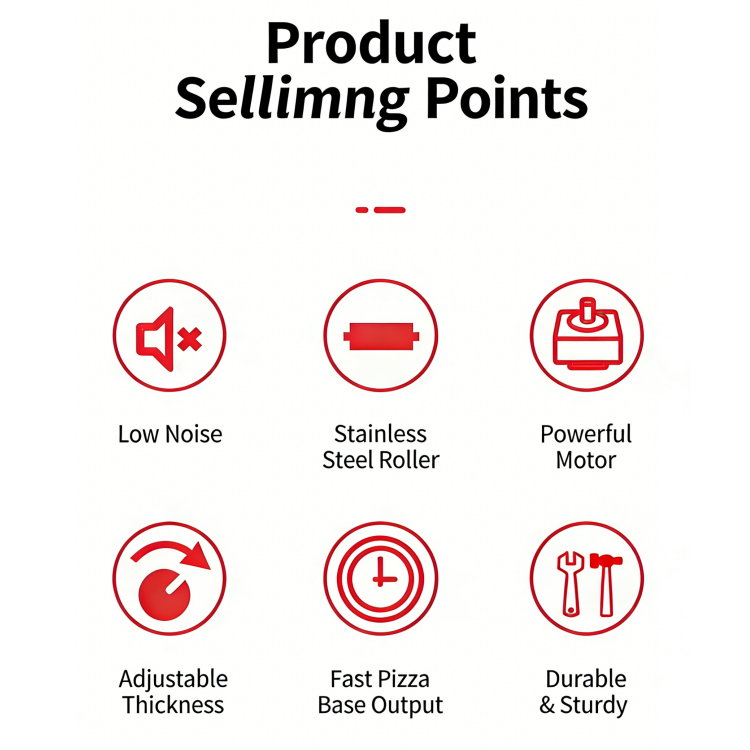
Specialized modular setups handle complex menu items efficiently. Integrating a dedicated bakery pastry machine streamlines laminated dough production significantly. Croissants and puff pastries require precise mechanical sheeting to preserve butter layers. Similarly, flatbread production demands immense throughput. Installing a high speed pizza crust maker machine standardizes crust thickness instantly. These dedicated units eliminate bottlenecks across high-throughput flatbread and pastry lines.
Proofing requires rigorous environmental management. Standard proofing cabinets maintain optimal yeast activity environments continuously. They typically sustain temperatures between 72°F and 100°F. They also regulate relative humidity closely between 85% and 95%. This prevents dough skin formation during active fermentation.
Blast chillers and retarders offer entirely different capabilities. Retarders pause yeast fermentation effectively by dropping temperatures rapidly. This allows flexible production scheduling across multiple shifts. You can mix dough on Tuesday and bake it fresh on Wednesday morning. Slow retarding also develops deeper flavor profiles and creates beautifully blistered crusts during baking.
Oven architecture dictates final product quality heavily. You must match the thermal delivery method directly to your primary menu items. Making the wrong choice leads to dense cakes or pale bread crusts.
Chart 1: Oven Architecture Comparison | |||
Oven Type | Heat Delivery Method | Ideal Bakery Applications | Key Advantages |
|---|---|---|---|
Convection Ovens | Fan-forced circulated hot air | Cookies, muffins, delicate pastries | Even baking, rapid heat transfer |
Deck Ovens | Radiant heat via stone/ceramic bottoms | Artisan breads, heavy crust pizzas | Mimics traditional brick oven spring |
Rotary/Rack Ovens | Rotating vertical racks in heated chambers | Standardized industrial-scale loaves | Massive output, uniform coloring |
Your current production line will eventually outgrow its physical footprint. You must assess whether new machinery accommodates future expansion seamlessly. High-quality food processing equipment usually features modular architectures. You should easily integrate feed conveyors later without redesigning the entire facility. Adding granular dispensers for seed toppings should not require replacing your primary dough divider. Forward-thinking modularity prevents expensive overhauls when your product volume doubles next year.
Food safety compliance drives modern equipment design heavily. You must look for rigorous hygienic design features immediately. Tool-less disassembly allows your night crew to break down machines quickly for deep cleaning. Sloped surface designs prevent standing water accumulation after washdowns. Food-grade stainless steel construction resists corrosion and prevents microscopic bacterial growth. Enclosed systems reduce biological contamination risks by minimizing direct human handling. These features satisfy strict health codes easily during unannounced inspections.
You must factor in all hidden operational costs before finalizing any purchase. Energy consumption rates vary wildly among heavy thermal units. Deck ovens pull massive electrical loads during initial heat-up phases. You must analyze required preventative maintenance schedules carefully. Complex machines requiring proprietary replacement parts will drain your operating budget over time. Assess whether local technicians can source standard generic parts locally. Highly efficient machinery minimizes daily utility draws while maintaining steady production speeds.
Buyers frequently purchase machinery lacking proper operational tolerances. Ignoring fundamental baking science during procurement creates disastrous results. Many operators buy high-speed industrial mixers hoping for faster batch times. However, excessive friction generates unwanted heat rapidly. This heat prematurely activates yeast in low-hydration doughs, ruining the entire batch structure. You must match machine specifications directly to your unique recipes.
Overlooking preventative maintenance realities paralyzes busy facilities. Equipment downtime halts the entire production line instantly. Choosing machinery containing inaccessible moving parts guarantees future failures. Staff simply will not lubricate hidden gears daily. You must select units granting easy access to all critical lubrication points. Daily cleaning routines dictate actual machine longevity heavily.
Misjudging facility constraints remains a remarkably common operational hazard. Operators often acquire heavy machinery without auditing their physical infrastructure beforehand. You must verify several critical facility capacities first:
HVAC Capacity: Large rotary ovens generate massive ambient heat, overwhelming standard ventilation hoods quickly.
Electrical Loads: Ensure your breaker panels handle required industrial three-phase power draws safely.
Floor Space and Load Bearing: Verify floor joists can support multi-ton equipment and check doorway clearances prior to delivery.
Drainage Access: Automated washdown systems require immediate proximity to high-capacity floor drains.
When searching for reliable food processing equipment for sale, you must look beyond glossy catalogs. Evaluate manufacturers based heavily on their proven industry expertise. Do they provide actionable diagnostic production data? Do they offer layout consultation services? Premium vendors act as operational partners, not just metal fabricators. They should analyze your specific throughput bottlenecks before recommending any specific models.
Demand absolute clarity regarding end-to-end solution verification. Purchasing the machine represents merely the first step. You need explicit installation support parameters outlined in writing. Verify local technician availability for emergency dispatch situations. Review warranty terms closely to understand labor coverage limits. A robust warranty means nothing if the nearest authorized technician lives three states away. Rapid-response support keeps your line running smoothly.
Advise your decision-makers to mandate a comprehensive trial phase. Request live demonstrations using your specific proprietary recipes. Testing generic flour tells you nothing about how a divider handles your sticky sourdough. You must verify crumb texture, actual output speeds, and even heat distribution directly. Test runs expose design flaws immediately, saving you thousands of dollars in mismatched acquisitions.
Upgrading bakery infrastructure represents much more than a simple capacity play. It remains a foundational investment driving product consistency, hygiene compliance, and long-term labor efficiency forward. Replacing inconsistent manual labor with precise mechanical automation protects your brand quality daily. You secure higher profit margins when ingredient waste drops significantly.
Take these actionable next steps to begin your facility upgrade:
Conduct a comprehensive workflow audit to identify your most significant daily bottlenecks (e.g., mixing delays vs. baking constraints).
Establish hard data baselines for current throughput, waste percentages, and daily sanitation labor hours.
Define your exact dough hydration ratios and thermal requirements clearly.
Engage manufacturer sales teams only after defining these rigid operational parameters.
Schedule live equipment demonstrations utilizing your own unique ingredient blends.
A: Well-maintained industrial mixers and rack ovens easily last 10 to 15 years or more. Longevity depends entirely on maintenance routines. Daily cleaning, prompt part replacement, and strict preventative maintenance schedules dictate actual durability. Neglected machinery often fails within five years due to friction and sanitation neglect.
A: Base your choice on your primary applications. Spiral mixers handle larger, heavier bread doughs efficiently because they keep the dough cooler during intensive kneading. Planetary mixers provide excellent versatility using interchangeable attachments, making them ideal for delicate batters, icings, and lighter pastry applications.
A: Approach used machinery with high skepticism. Always check historical maintenance logs thoroughly. Verify current availability of OEM replacement parts. Inspect food-contact zones for deep micro-abrasions harboring bacteria. Finally, confirm any remaining manufacturer warranties or reliable refurbisher guarantees before transferring funds.
A: Automation minimizes direct human handling, drastically reducing biological contamination risks. Enclosed mechanical systems prevent airborne debris from entering dough batches. Furthermore, hygienic designs featuring Clean-in-Place (CIP) capabilities ensure thorough sanitation, allowing bakeries to meet strict regulatory health codes consistently.
