


Views: 0 Author: Site Editor Publish Time: 2026-07-12 Origin: Site


Modern pizzerias face dual challenges every single shift. Operators consistently struggle to maintain crust consistency while managing severe skilled labor shortages during peak dining hours. When ticket times spike, unevenly stretched dough ruins customer experiences. The automatic pizza press serves as a critical standardization tool to solve this exact bottleneck. It does not replace quality ingredients or established artisan recipes. Instead, it provides a highly efficient desktop solution designed for commercial kitchens with severely limited real estate. Finding the right compact model demands careful review of specific operational metrics. Readers will learn how to objectively evaluate these sophisticated units based on throughput, mechanical reliability, and spatial constraints. We will explore essential heating features, integration realities, and the logical framework required for selecting the perfect press for your business.
Desktop automatic dough presses solve bottleneck issues by standardizing crust thickness and diameter without requiring highly trained pizzaiolos.
Heated platens are essential for reducing gluten snapback, but require specific power configurations (often 220V) and operator safety protocols.
When evaluating compact pizza equipment, total cost of ownership must factor in maintenance ease, motor durability (e.g., 390W+ commercial ratings), and parts availability.
High-volume chains should evaluate OEM pizza press options to ensure strict compliance with proprietary dough recipes and kitchen workflow standards.
Defining success means looking at strict operational metrics. A successful implementation drastically alters your kitchen dynamics. It effectively cuts a 60-second manual dough stretch down to a mere 10-second machine press. You also want to achieve zero rejected crusts during a chaotic Friday dinner rush. Reducing waste directly improves your bottom line. Managers can reallocate labor to finishing and baking stations instead of prep.
This efficiency introduces a well-known industry debate regarding consistency versus artisan craft. You must transparently address this trade-off before purchasing. Presses excel at shaping dense or standard crusts perfectly every single time. However, they demand specific recipe adjustments. High-hydration dough behaves differently in a pressing machine. It tends to stick to the metal. You usually must tweak hydration levels or dusting techniques compared to traditional hand-tossing methods. The goal is to strike a balance between machine compatibility and flavor profile.
Space utilization drives many purchasing decisions today. Urban pizzerias, ghost kitchens, and food trucks lack vast floor space. They simply cannot fit bulky, floor-standing dough sheeters. Because of this physical reality, an automatic dough press is often the optimal choice. It sits securely on a standard stainless prep counter. It maximizes vertical space while delivering high commercial output. You achieve floor-model performance without sacrificing valuable walking room.
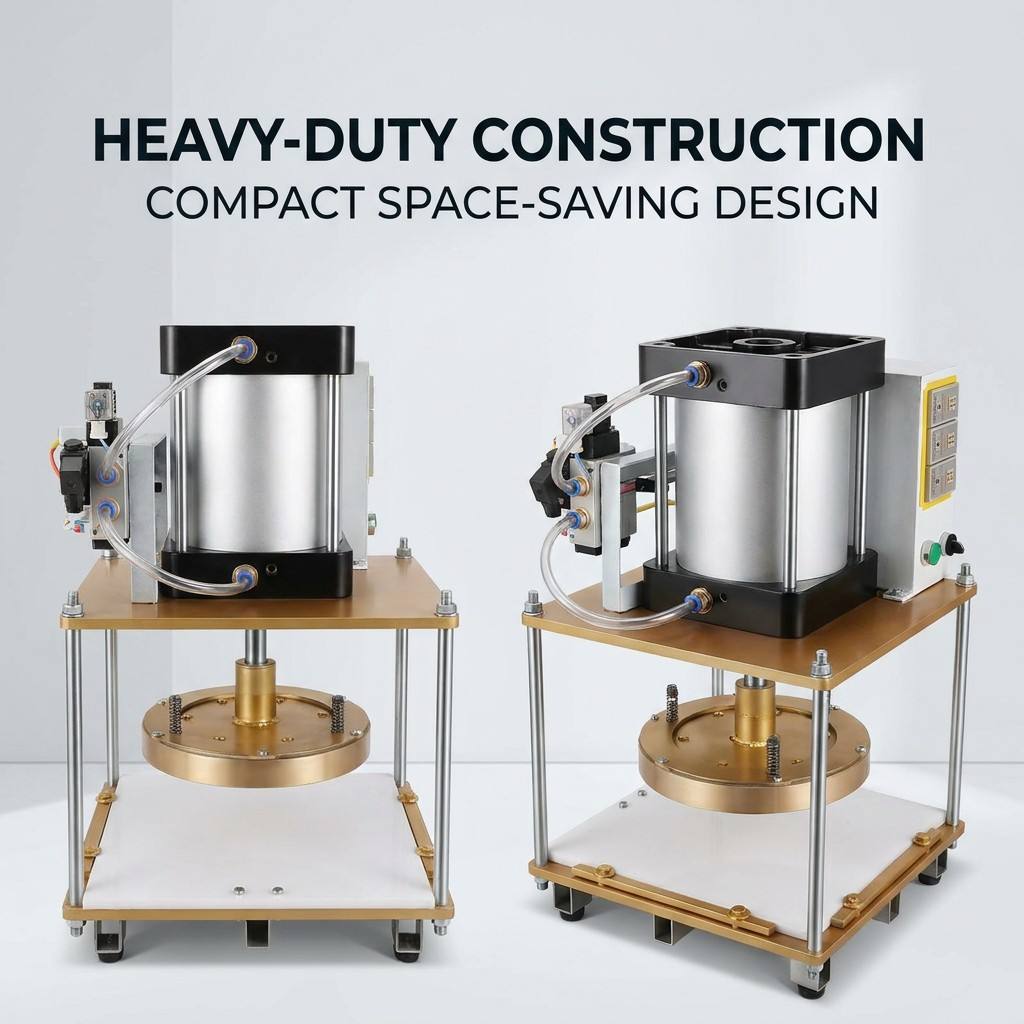
You need to evaluate standard output capabilities carefully. Many pizzerias target a maximum 16-inch or 18-inch diameter. Ensure the platens can comfortably handle your largest menu item. A machine capped at 14 inches limits your large pizza offerings. Next, check the mechanism reliability for micro-adjustments. Precise crust thickness prevents uneven baking. A reliable automatic pizza dough press machine uses robust internal components to adjust spacing. Buyers usually choose between cam-driven and hydraulic systems. Cam-driven systems offer excellent durability for standard operations. Hydraulic models provide immense, consistent pressure for denser doughs.
Heated versus cold pressing matters greatly. Dual-heated platens are the commercial industry standard now. They flash-heat the exterior of the doughball. This action relaxes the gluten memory instantly. It prevents the crust from shrinking back into a smaller circle after pressing. Consider power draw when evaluating heated plates. Heated machines consume significantly more electricity. Evaluate units offering eco-modes for slower afternoon shifts. These modes maintain a base temperature. They avoid the massive power draw of continuous high-heat commercial cycles.
Assess the motor wattage carefully during your review. A 390W motor is a common baseline for moderate commercial operations. Match the wattage rating to your specific dough density. Stiff, low-hydration dough heavily strains weak motors over time. Identify potential failure points early in the selection process. Semi-automatic systems differ mechanically from fully automatic pneumatic ones. Pneumatic models require an external air compressor. Electric models rely entirely on internal motors. Each configuration has distinct maintenance needs and stress tolerances.
Evaluation Feature | Cam-Driven Electric Systems | Hydraulic / Pneumatic Systems |
|---|---|---|
Pressure Generation | Internal electric motor and gear reduction | Fluid mechanics or external air compressor |
Dough Compatibility | Best for standard to high hydration doughs | Excels at highly dense, low hydration doughs |
Maintenance Needs | Regular greasing of mechanical joints | Checking fluid levels or compressor line seals |
Footprint Impact | Fully self-contained within the desktop housing | May require external hoses and compressor space |
Integrating a heavy new machine causes workflow disruption initially. You must proactively reconfigure the prep station to accommodate it safely. These desktop units are exceptionally heavy. They often exceed 150 pounds. Always check your countertop weight load requirements. You need a highly reinforced stainless steel table. A wobbly or standard-grade table creates severe safety hazards for your staff. This rule especially applies to any heavy-duty desktop pizza dough press. The repetitive downward pressing motion creates kinetic stress on the table joints.
The staff training curve requires patience and structured guidance. Moving from manual stretching to machine operation feels strange at first. Highlight safety protocols immediately upon installation. Heated upper and lower plates cause severe burns if mishandled. Pinch points exist on all moving mechanical arms. Thorough safety training prevents serious kitchen accidents. Staff must learn how to center the dough perfectly. Off-center placement results in lopsided crusts.
Downtime risks hurt profitability during peak seasons. Establish strict daily cleaning protocols for non-stick platens. Aggressive scrubbing damages the delicate Teflon or ceramic coatings. Staff must use soft cloths and manufacturer-approved cleaners only. Finally, assess realistic uptime metrics critically. Manufacturer claims often reflect ideal laboratory conditions. Real-world commercial kitchens are much harsher environments. Dust, flour, and oil infiltrate the chassis. Regular preventive maintenance prevents unexpected breakdowns.
Standard commercial units fit many standard applications perfectly. They are best for independent operators needing quick deployment. They ship fast and include standard manufacturer warranties. If your menu uses standard crust sizes and common hydration levels, these off-the-shelf units work beautifully. You can order one today and have it operational by next week. They offer a predictable baseline of performance for single-unit pizzerias.
Sometimes, custom engineering makes more financial sense. Multi-unit franchises often require strict brand consistency across all locations. They need locked thickness settings to prevent unauthorized staff tampering. They might also want custom platen shapes for unique regional pizzas. High-volume chains frequently select an OEM pizza press to meet these exact operational standards. Original Equipment Manufacturers can tweak the motor torque. They can adjust maximum temperature thresholds. Regional safety certifications also drive custom manufacturing decisions.
Never ignore compliance and safety marks during procurement. Rigorously verify NSF, ETL, or CE certifications. Health inspectors check for these specific stamps during routine operational visits. Uncertified equipment can trigger steep local fines. It can even shut down your entire operation until removed. Certified machines guarantee food-safe metals and easily cleanable surfaces.
Focus closely on the cost-to-output ratio when making your final choice. Build a clear framework to calculate your return on investment. Compare your anticipated hourly pizza volume against the upfront cost of the machine. High-volume weekend nights justify the capital investment quickly. A reliable piece of compact pizza equipment pays for itself by drastically reducing hourly labor costs. It eliminates the need for a dedicated, highly paid dough-stretching specialist.
Warranty terms and established service networks matter immensely. Localized access to replacement parts is crucial for kitchen survival. If a vital fuse, relay, or heating element blows out on a busy Friday night, you need those parts by Saturday morning. Fast local service trumps initial purchase savings every single time. A cheap imported machine lacking domestic support becomes a very expensive paperweight when it breaks.
Take practical next steps before authorizing the purchase. Buying blindly leads to operational friction. We recommend following a structured evaluation path:
Request live vendor demonstrations using your exact dough recipe.
Verify your kitchen's electrical capacity with a licensed electrician.
Test the pressed crust after baking to evaluate the final crumb structure.
Measure your exact counter space, accounting for clearance required by moving parts.
Upgrading your prep station is a major strategic decision. An automatic pizza dough press represents a core investment in operational predictability. It standardizes output and stabilizes your labor requirements during the toughest shifts. We advise buyers to look past flashy digital screens. Prioritize durable internal mechanics and precise thickness controls over superficial features. Ensure the chosen unit aligns strictly with your dough profile and exact kitchen footprint.
Focus on robust mechanical components like cam-driven motors or strong hydraulics.
Ensure your electrical panel supports the necessary 220V power draw for dual-heated platens.
Prioritize standardizing your dough hydration to maximize machine efficiency.
Commit to strict daily cleaning regimens to protect the non-stick platens.
A: Yes, but with caveats. High-hydration doughs tend to stick to the platens. You must use adequate dusting flour or apply food-safe release sprays. Alternatively, slightly lowering the hydration recipe often yields cleaner pressing results and prevents frustrating tearing during the pressing cycle.
A: No. The primary purpose of heated platens is to relax the gluten network instantly. A rapid press at a high temperature prevents the dough from snapping back. It does not stay in contact long enough to par-bake or activate the yeast.
A: Standard cold presses often run on typical 110V outlets. However, commercial heated presses generally require a dedicated 220V circuit. Dual-heated platens draw massive amperage to maintain temperatures during rapid recovery cycles. Always consult a licensed electrician to verify your panel capacity before purchasing.
A: With proper care, non-stick coatings endure for years. However, in high-volume commercial settings processing hundreds of pizzas daily, platens may require recoating every two to three years. Never use abrasive metal scrapers. Gentle daily cleaning extends the lifespan of the factory coating significantly.
