


Views: 0 Author: Site Editor Publish Time: 2026-07-08 Origin: Site


High-volume bakeries often face operational bottlenecks when relying on manual churro extrusion. Inconsistent product sizing creates severe quality issues. High labor costs and operator fatigue eat directly into your profit margins. Transitioning to automation solves these distinct challenges. You invest in strict standardization and significant yield optimization. Food safety compliance also becomes much easier to manage across shifts.
Our goal here is simple and precise. We provide a strictly objective, technical framework. You can evaluate automated equipment based on actual commercial realities. We explore hopper capacities, drive systems, digital controls, and workflow integration. This helps you confidently upgrade your bakery floor. You will learn to handle peak volumes without sacrificing the authentic texture of your signature dough.
Upgrading to an automatic churro making machine requires matching machine hopper capacity (e.g., 15L to 30L+) with peak hourly demand to prevent dough resting degradation.
A food-grade stainless steel churro extruder is non-negotiable for handling high-pressure, dense doughs while maintaining sanitation compliance.
Digital and hydraulic systems offer distinct advantages: digital ensures precision portioning, while hydraulic drives handle stiffer, traditional dough formulations.
Sourcing an OEM churro maker can provide custom nozzle configurations (e.g., hollow profiles for fillings), but requires rigorous vetting of spare parts availability.
Scaling a bakery operation demands precise timing. Recognizing when to upgrade your equipment often dictates your overall profitability. Evaluating your current production limits is the first step.
You must define the specific production metrics where manual systems fail. Manual hand-crank extruders typically max out around 100 to 150 pieces per hour. Peak service times usually demand output exceeding 500 pieces per hour. Semi-manual machines often struggle to keep pace during these rushes. Operators experience physical fatigue, causing output speeds to drop significantly. Upgrading to a commercial churro machine becomes essential once your hourly demand consistently outpaces manual labor limits. High-capacity machines ensure you never turn away customers during weekend rushes.
Human error carries a hidden financial cost in commercial kitchens. Manual extrusion produces inconsistent lengths and varying weights. These variations lead directly to uneven frying times. Thicker pieces develop undercooked, raw dough centers. Thinner pieces burn quickly and absorb excess oil. These inconsistencies frustrate customers and cause fluctuating profit margins. Automated extrusion guarantees exact portion control. Every single pastry drops into the fryer at the identical weight. This uniformity stabilizes your food costs and guarantees a predictable product for your customers.
Automating your extrusion process creates immense labor efficiencies. You can evaluate the return on investment by analyzing staff redeployment. A dedicated staff member no longer needs to stand over a hot fryer cranking a heavy wheel. You can redeploy this back-of-house staff member to more valuable tasks. They can focus on quality control, frying management, and customer service. Reducing manual labor also lowers workplace injury risks. Operators no longer face repetitive strain injuries from forcing stiff dough through a manual press.
Evaluating hardware requires looking beyond basic aesthetic design. The internal components determine how well the machine handles continuous daily use.
Choosing the right hopper capacity directly impacts dough quality. You must compare small-batch viability against large-scale demands. A 15L machine suits mid-sized cafes doing moderate volume. Evaluating 30L machines makes sense for uninterrupted, continuous production runs. However, oversized hoppers present unique risks during slow periods. If you load 30 liters of dough for a slow Tuesday shift, the dough sits too long. You risk dough oxidation and detrimental temperature changes. The dough structure degrades, resulting in dense, unappealing pastries.
Best Practice: Always match your hopper size to your peak two-hour demand window.
Material selection dictates machine lifespan and sanitation standards. A 304 or 316 stainless steel churro extruder is an absolute necessity for commercial kitchens. Stainless steel resists corrosion from aggressive cooking fats and frequent washdowns. It endures the extreme physical pressure required to push stiff choux pastry through narrow nozzles. Furthermore, stainless steel construction easily passes stringent health inspections. Look closely for CE and NSF certifications. These badges confirm the equipment meets international food safety and hygiene protocols.
The drive mechanism supplies the force needed for extrusion. Traditional churro dough requires massive torque to push through star-shaped nozzles. Dense formulations can easily stall weak motors. You must choose between hydraulic and electric systems based on your specific recipe.
Drive System Type | Primary Advantage | Ideal Dough Type | Maintenance Consideration |
|---|---|---|---|
Hydraulic System | Maximum torque and steady pressure | Stiff, dense, traditional Spanish dough | Requires periodic hydraulic fluid checks and seal replacements. |
Direct-Drive Electric | Precise digital control and lower noise | Lighter choux pastry or high-hydration dough | Virtually maintenance-free, but vulnerable to motor burnout if overloaded. |
Hydraulic fluid systems easily power through the stiffest doughs without motor strain. Direct-drive electric motors offer cleaner operation but demand built-in overload protection.
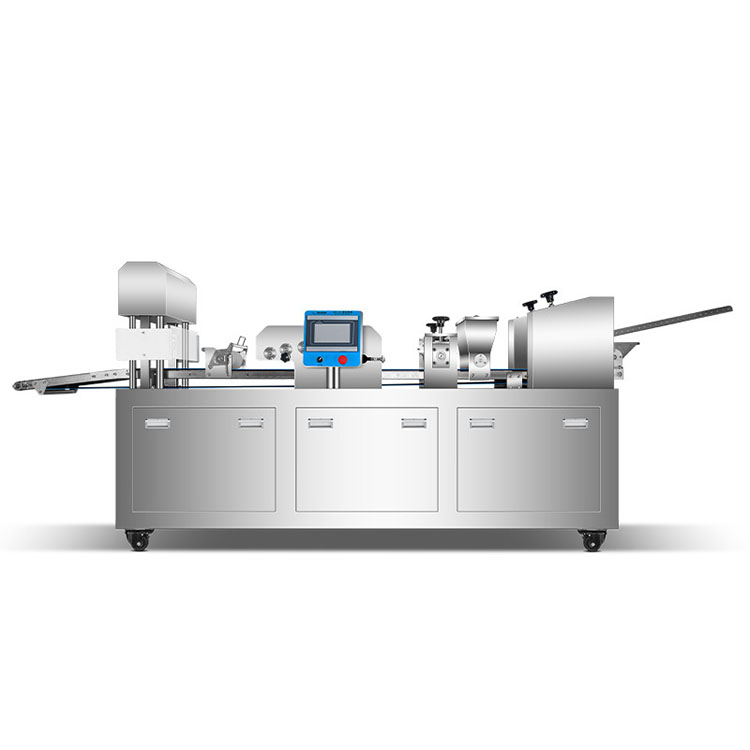
Modern commercial bakeries rely heavily on digital interfaces. Programmable parameters remove guesswork from the production line and ensure strict repeatability.
Digital controls revolutionize how you cut and portion dough. Programmable control panels dictate exact cutting lengths and extrusion speeds. You can set the machine to cut exactly at six inches every single time. A digital sensor cutter reacts instantly to the extrusion rate. This precise synchronization drastically reduces raw dough waste. It also ensures consistent aesthetics for boxed retail packaging.
Your equipment should adapt to evolving menu trends. A high-quality model functions as a versatile automatic snack machine. It must handle vastly different hydration levels. Classic Spanish churros utilize a dense, low-hydration dough. Thicker Latin American styles require higher hydration and wider extrusion profiles. You want equipment capable of switching between these styles through simple nozzle changes and speed adjustments. This versatility allows you to expand your menu without buying separate machines.
Commercial kitchens present numerous hazards. Intelligent sensors protect both your staff and your machinery. Look for built-in overload protection circuits. Pressure sensors actively monitor the internal hopper resistance. If the dough jams or becomes too cold to extrude, auto-shutoff features instantly kill the power. These safety mechanisms protect the main motor from catastrophic burnout. They also prevent the hopper barrel from cracking under extreme internal pressure.
Buying a machine solves the extrusion problem. However, integrating it into your daily operations creates new challenges. You must plan for daily maintenance and physical layout constraints.
Cleaning dense, sticky dough from narrow tubes is a universal pain point. Residual oils quickly turn rancid if left inside the hopper overnight. You must evaluate the ease of disassembly before purchasing.
Can you remove the hopper without unbolting the main frame?
Does the internal piston slide out easily for deep sink washing?
Can the nozzle heads be broken down without specialized wrenches?
Machines requiring tool-free disassembly save hours of labor every week. Operators are more likely to perform thorough cleanings when the process is straightforward.
Even the best automatic churro making machine requires operator competence. The learning curve for digital models involves several steps. Staff must learn how to program custom lengths. They need to understand how adjusting extrusion speeds affects dough thickness. Recognizing pressure faults quickly prevents motor damage. You must factor in two to three days of supervised training for your main line cooks. Detailed operational manuals and quick-reference cheat sheets help bridge this knowledge gap.
Physical integration requires careful kitchen planning. Assess the machine's overall footprint. Countertop models save space but require sturdy stainless steel tables. Floor-standing 30L models demand dedicated square footage. Next, verify voltage requirements. Many large commercial models require 220V commercial lines rather than standard 110V outlets. Finally, consider proximity to commercial fryers. You want the extruder close enough to drop dough directly into the oil. However, placing it too close creates severe heat-damage risks to the machine's sensitive digital electronics.
Procuring commercial equipment involves strategic vendor selection. You need a partner capable of supporting your specific production needs over the long term.
Off-the-shelf equipment works for standard bakeries. However, specialty brands often require unique physical signatures. You might need proprietary nozzle shapes to stand out in a crowded market. Some recipes require specific hollow diameters for specialized cream or chocolate fillings. In these cases, collaborating with an OEM churro maker makes perfect sense. An OEM partner can machine custom die plates exactly to your specifications. They can also integrate custom branding directly onto the machine chassis for franchise rollouts.
Machine downtime instantly halts your revenue stream. Therefore, robust after-sales support remains critical. You must evaluate the availability of local service technicians. Responsive technical support can help you troubleshoot minor sensor faults over the phone. Most importantly, verify the domestic availability of spare parts. Waiting three weeks for an international shipment of basic O-rings or cutter blades cripples your operation. Always audit the manufacturer's warranty terms strictly before issuing any Purchase Order. Ensure they cover the primary motor and the digital control board for at least one year.
Scaling your bakery production relies on making informed equipment choices. We established a clear evaluation framework to guide your investment. First, match the machine's hopper capacity directly to your actual peak demand. Avoid oversized hoppers for low-volume operations. Second, prioritize heavy-duty stainless steel components to ensure food safety and long-term durability. Finally, align the drive system—whether hydraulic or digital electric—with your specific dough density.
Your next steps require active vendor engagement. Request a live or virtual demonstration from the manufacturer using your exact dough formulation. Verify all CE and NSF safety certifications independently. Audit the warranty terms and spare parts availability. Taking these practical steps guarantees you select machinery that enhances your workflow and protects your bottom line.
A: A mid-to-large bakery typically requires a 15L to 30L hopper. A 15L capacity handles steady daily traffic efficiently. For massive weekend rushes or wholesale production lines, a 30L hopper ensures continuous output without constant, time-consuming dough reloading.
A: Yes, most machines handle alternative recipes. However, gluten-free dough often lacks elasticity and feels denser. You must select a machine with a powerful hydraulic drive or a high-torque electric motor to push this stiffer dough through the nozzles smoothly.
A: With tool-free disassembly features, a trained operator can break down and clean a commercial model in 20 to 30 minutes. You must remove the hopper, piston, and nozzles daily to sanitize them with hot soapy water and degreasers.
A: A mechanical cutter operates on a fixed physical timer or manual trigger, which can cause slight length variations. A digital sensor cutter uses programmed parameters and optical or speed sensors to slice the dough at exact, repeatable lengths every time.
A: Yes, most 30L commercial machines draw significant power. They typically require dedicated 220V/240V electrical lines. Always consult an electrician to verify your kitchen's power output before purchasing, as plugging these into standard 110V outlets will cause breaker trips.
